Golden Delicious Qian – Everyone is Living Two Lives

Many lives, many deaths, many visions of peace.

       You were saved because you were the last.
       Alone. With others.
       On the right. The left.
       Because it was raining. Because of the shade.
       Because the day was sunny.
       – Wislawa Szymborska

My two lives, my many lives, are simultaneous. I leave home and I don’t. I die and I don’t. I’m asleep and dreaming, and also awake and dreaming. The car crash, the tyranny, the epidemic, the fire; it killed me, it missed me, I was careful, I was careless but lucky. It was my fate.

And here we are living the life we have, ramshackle and improvised, with the ice sheets melting, and the old agreements that held us together, broken.

This is our time to live. We don’t get another, we have to love and enjoy each other and get enlightened right here. 

I am also an apple tree, by which I mean that is one of my lives. 

Regrowth from brushfire in Australia

The little apple tree in the front yard was gradually shaded more each year by Monterey pines. It is a golden delicious, but though its name has the flavor of advertising, it’s a farm tree and the apples are greenish yellow, crisp, and delightful. In October three years ago, the fire from the east, pushed by Santa Ana winds, burnt through Glen Ellen, leaving only porcelain toilets and chimneys above ground, around the winding valley road beside Sonoma Mountain, destroyed the newly built house in the middle distance, but left the children’s play structure untouched and intimate against the sky, crossed a paddock, jumped the road, and burnt the little apple tree along with the persimmon tree near it and the Gravenstein apple tree, and the lilac and the cedar, and the old concord and chardonnay grape vines, though none of them fatally.

After some recovery time the trees were pruned but the great pines shed every needle and died. The little apple recovered and grew tall, rather pleased with the improved light.

This year, in August, lightning hung in great nets in the sky, like an image of the galaxy. There was little rain and the Santa Anas blew hot and hard again, whipping the lightning strikes into fires that have been burning for over a month. In our case the wind merely broke off the apple tree at a height not much taller than a person. She now looks like a young girl with wild, wild hair. We picked the apples on the broken branches and gave her some water during the heatwave that followed. I felt for her the way I feel for the little fox who comes by for dates in the dark of the night and has to dodge coyotes, dogs, gangs of raccoons, the occasional bobcat, and the rare mountain lion. 

A month later it is autumn, and the Sonoma grape harvest is in early along with its questions of insurance and smoke damage and are there enough adjustors, and will the workers harvest the cabernet and pinot noir that’s left on the vine and so get paid and so send money home to, say Oaxaca, but probably they won’t. 

There are still a few golden apples on the boughs, and the little tree has bloomed. Perhaps, in case she died, she wanted to offer something before departing. 

Which is a quest we are all engaged in. The trees and the animals do what they can in these strange, hard days. And so do we, walking through the valley of this time, describing what we can, sharing what we can, holding lanterns. 


Dear reader – If you like what we do and want to read more UC Issues –

Become a Patron!

Qian is Separated From Her Soul – The Koan Story

This koan story from Zen Master Wuzu emerged as the inspiration for our 5th Issue of Uncertainty Club. We are launching it in a time when most of us are confined at home and many of our usual social activities are curtailed due to the Covid 19 pandemic. Each of our previous issues has formed around a theme which refers to a koan or verse from a zen text.

We editors grew particularly attached to Qian’s story as the pandemic, fires and political storms raged. So here is her story as recorded for us in the Tang Dynasty, a time when China was going through many harsh adjustments to reality. Sound familiar?

This translation is by Roshi Susan Murphy, taken from her book, “Upside Down Zen”.

Once upon a time, there was a beautiful girl called Qian. She lived beside one of the great rivers of Ancient China, with just her father, Zhangken. Her sister had died young, and her father cherished her even more deeply after that. Nothing is known about her mother (which is often the way with stories of this kind).

As a young girl, Qian was inseparable from her cousin, Zhao, a boy slightly older than her, a playmate, gradually a soulmate. One day, watching Qian and Zhao together, Ken said in play, “You’re such a well-matched couple. When you grow up we should marry you to each other, for you seem to belong together.” And so they childishly thought of themselves as engaged, and in the course of time they found themselves in love with each other. But when Qian finally reached marriageable age, an important official approached her father for her as a wife, and Zhangken, who had long forgotten his lightly spoken words, gladly consented.

Zhao was devasted, and vowed at once to go and live in a distant province, far from the heartbreak of losing Qian. And Qian was like-wise lost in grief, for she was a dutiful and loving daughter. But on the night that he was pushing off in his boat from the river, heading toward forgetfulness, he was startled to hear Qian’s voice as she came running down the path, saying, ‘Wait, it’s me – I cannot bear to lose you. Let me run away with you!’ Shaking with joy and fear, the two travelled up the river to a remote province, far enough away for the wrath of Zhangken to be forgotten, for a time, and were married.

They lived there in all the usual ways of considerable happiness and, in the course of time, had two children together. Life grew thick, and busy, but as the seventh year approached, Qian grew sad and sorrowful. Finally she came and told Zhao that she had to go back to ask forgiveness and to honor her father before he grew old and died – that she could not remain forever an outcast from her home. Zhao was full of anxiety about this but he assented to her wish, and they planned to make this difficult journey together as soon as possible. And so they set out to travel back down the river.

When they arrived back in her father’s province, as was the custom in old China, Zhao went first to see her father and receive the brunt of his anger, while Qian remained in the boat. And so he was astonished when Ken received him with obvious pleasure, saying, ‘Where have you been all these years? I’ve missed you!’ Zhao bowed his head and asked forgiveness, reassuring him that his daughter Qian was well and had been very happy as his wife, and that she was now the mother of two fine children and was here to seek his forgiveness. But what Zhangken said in reply nearly stopped his heart.

‘Which Qian is that?’ asked Ken. ‘For more than six year – ever since you departed so suddenly for a distant place – Qian has been ill in bed, hardly moving and unable to speak. Come with me, and see for yourself.’ Fearfully, Zhao went with him and saw that, indeed, Qian was lying in her old room barely conscious, but seeming to register his presence as he came into the room.

‘This is very strange,’ he told Ken, ‘but stranger still is what I have to show you. Please, come with me.’ Together, they walked out of the house and down the path towards the boat, where Qian has waiting.  But Qian had grown tired of waiting in the boat, and she was walking towards them. And behind them, coming from the other direction, the other Qian had risen from her bed and was also walking along the river path.

The two men stepped back and watched in astonishment as the two Qians met on the path and took each other in. And then each Qian stepped forward into the arms of the other to embrace her completely, becoming in that moment a single Qian more astonishing than ever before.

Qian made a deep bow to her father. ‘If indeed you are my daughter,’ he said, lost in wonder, ‘I have nothing but love for you.’

And Qian turned to Zhao. ‘I couldn’t bear to lose you,’ she told him, ‘and I was happy with you, except for my deep shame. But all the time, I did not know that I was sick at home in my father’s house, devastated by a sorrow beyond dreams.’

‘I myself am not sure which was the real Qian, the one as if dead, at home in my father’s house, or the one who has lived with you, wife and mother to your children.’

So Wuzu asked, which is the true Qian?


Dear reader – If you like what we do and want to read more UC Issues –

Become a Patron!

Vimalakirti’s Sick Bed

Vimalakirti in his bed – Vimalakirti Sutra

‘I am sick because the whole world is sick. If everyone’s illness were healed, mine would be, too’ – Vimalakirti, translated by Joan Sutherland, from her Vimalakirti & the Awakened Heart.

In a story first told two thousand years ago, the great Vimalakirti, the epitome of someone following the Buddha way while maintaining a household and family, lies sick in bed in a bare room. He’s taken to bed because he finds the entire world ill. While he’s in his 10 x 10 room, Shakyamuni is down the street in what appears to be in a garden of delight. He hears of Vimalakirti’s state and sends a crew of divine and enlightened emissaries to visit him, and thus begins the elaborate, fantastical story of the sick Bodhisattva who asks about nonduality. From his hospice bed he asks: “What is the Dharma gate of nonduality that the bodhisattvas enter?” This elicits a variety of responses from the gathered celestial beings. In the story, Vimalakirti’s own response is silence, which Joan Sutherland describes as ‘roaring’. Yes, sounds about right for that silence.

The koan regarding this story (Case 84 – Blue Cliff Record), never mentions Vimalakirti’s famous silence. The koan ends with Manjusri speaking and Xuedo commenting. Xuedo reminds us of the true era in which this story is occurring. 

Manjusri asked Vimalakirti, “Each of us have spoken; now, kind sir, you must tell us what the bodhisattva’s Dharma gate of nonduality is.” (Xuedo comments: What will Vimalakirti say? All has been revealed.)

Joan Sutherland points out that the sick/well split found in the sutra is echoed in the sick/well split found in the Qian story. In the sutra it is clear that Vimalakirti is not ill because of some deficiency. In fact, his illness is not a deficient condition relative to wellness. It is the necessary dark twin to Shakyamuni dwelling in a luxurious garden. The  spiritual beings who visit Vimalakirti are frightened of him, disturbed by him and his ill health. Since his question regarding nonduality is asked from his death bed, any valid response must include the reality of the wasting human who’s asking it.

Vimalakirti seems to have chosen illness almost as a teaching device, but I’ll take him at his word – his sickness is embodying the sickness of the world. His porousness, his open heartedness to the world, undoes the usual notions of choice. In some ways there’s not that much left of him to engage in choosing. He’s responding. Roshi Sutherland would say that Bodhichitta has risen in Vimalakirti, he moves with an awakened heart.

Qian Calls to Qian

Consider the Qian who does not head downriver, does not take a husband and start a family, but stays back. This Qian is upstairs in her sick room, some translations say she is in a coma. 

I realized I had seen the returning Qian as the rescuer. It was her vital embrace which restored the sick Qian. I had imagined that the sick Qian would vanish, becoming well in their merging. If this were true, then the question of which Qian is the true would have an answer – the Qian who’s well. This answer would break the wholeness, and back we’d be in the land of small questions and small answers.

It was the call of the Qian who stayed that troubled the heart of the Qian who left. It was the bed-ridden Qian, with her unknown life up in her room, who tugged on her distant soulmate to return. Just like the sound of geese in the fall dusk calls me to return to the great migration  home.

Covid quarters, China

It’s not so hard to see how other ‘sicknesses’  — say, daily double shots of anger — are not something that needs to be quashed. Rather, it’s a healing call from my sick bed, asking me to attend, to return to the source of my splitting.

Stone Woman Gives Birth in the Night

Sometime koans entrain other koans, forming constellations. They constellate what I think of as myself, they map the shape of my body in fresh ways. The koan: ‘The stone woman gives birth in the night’, showed up when Qian bumped into my dying mother. My mom had come to envision her death as giving birth. She said the baby was coming, but she did not know when. It was coming soon but could not be rushed.

A ninety-five year old woman on the verge of death seems as dark as a stone on a moonless night. She would not be rising from the hospice bed, not her body at any rate, which is where my mom had been located my entire life. The Qian in good health listens as the Qian who is sick tells him about the baby that is coming. The merging of the Qians may take place beyond the boundaries of a single body. 

Someone is always in the bed and someone is always sitting near. One is well, one is ill. Somehow, this entirety is the shape of my body. When the Stone Woman gives birth, when her water breaks, my mom and me, and the hospital bed and the fluorescent light and her roommate’s snoring, form a single, birthed body.

Corona

The Last Judgement, detail of the damned in the River Styx and Charon’s boat full of passengers, before 1562 by Tintoretto, Domenico Robusti (1560-1635)

Well make me down a pallet on your floor
Make me down a pallet on your floor
Make me a pallet down, soft and low
Make me a pallet on your floor

– Mississippi John Hurt

The current sick room stretches across the globe. In a real way, any person sick with the COVID-19 is so because the world is sick. As the world heals, each person heals. Retreating into our homes, we also enter a retreat space – to help and be helped. We are like countless Vimalakirtis taking our place in cells of nearly monastic isolation. As the cells in our bodies do what they can to live, to participate in that single great body, our physical separation is what we can do to live together, participants in a single great body.   

When Mississippi John Hurt sings about that soft and low pallet, he’s clearly thinking not only of sleeping. But his desire is still for nothing other than a place on your floor. The Buddhist notion of Sangha could be imagined as us all sleeping on a single floor, fulfilling a deep desire to rest together. The corona virus has us slightly separated, but at any time, millions dream together on this one great floor. Death has separated my mom and I slightly (?), but the stone woman continues giving birth. The Qians are slightly separated, yet a single river carries one to the other.

‘What did Vimalakirti say? It has all been revealed.’


Dear reader – If you like what we do and want to read more UC Issues –

Become a Patron!

How I Became a Ghost & Back Again

Qian Stayed – Corey Hitchcock 2020


Gone! 

Fire season’s hot breath scorched on into November. After five unnerving months I was still alive, but not unscathed. Raw, edgy and worn out by power outages, wind alerts and small, dangerous fires. Then the weather demons did a turnabout and a final fire outage-alert yielded overnight to a dizzying snowstorm. Within a week of the big snow, as things began to new-normalize, I answered a breathless call from one of my sisters. Our youngest niece was gone, dead by her own hand. I felt myself tip and fall, like Qian, into bed. Fire is dangerous, but alive. This death had snuffed out my ordinary joy in living.

A Ghost

What is this?’, I asked the I Ching, Oracle of Change. ‘Bound!’  the Oracle responded. That cautious hexagram’s moving line (me) had no field of activity. Exactly, I thought. No volition, no spark. I cooked tasteless meals, and woke unrested. Even small tasks were impossible. I was at once anxious, restless and paralyzed. One night, as I lay stiffly in my bed feeling into that numinous state between waking and sleeping, a ghost man came through the wall, completely attuned to his own misery and loneliness. Breathing with effort, he got into bed beside me. Not young, not old, he was dressed for a funeral and lay down fully clothed on top of the covers. He did not look at me, nor was he particularly frightening. I am not even sure he knew I was there. I’m attracting ghosts, I said out loud. Maybe I’m becoming a ghost.


A Dream  

The next night I dreamed:

I have in my closet a wonderful ancestral dress. It is cream colored and composed of many layers of lace and veil. It is a ritual dress, long like a wedding dress but not to be worn at a wedding. I meet a man I don’t know well who admires the dress. Thinking, ‘I don’t really need it’, I give it to him. This causes my father’s face to loom in fury at my disregard for this dress I’ve been given. Was it given by him? He does not speak, but glares fiercely and I feel intense shame that I have carelessly given away my ancient and precious heritage.
 

Another man appears carrying a drum and a small wooden ‘puzzle box’. He is ritually dressed and identified as an ‘ancestor’. Attached to the box is a small curved dagger, and inside is an amulet, finely engraved with the image of a woman wearing that wonderful dress.  The ancestor uses this curved dagger to sever the strange man’s attachment to my dress. ‘It must be returned!’, he shouts. And in this dream moment I feel relief because I know his words have made it so.

Breath fills my lungs again.

Breathing in the Dark

After the dream I discovered a fingernail hold of courage to peer further into the darkness. Its atmosphere seemed suffocating. How could I meet it? It was killing. I pictured myself holding onto an enormous stone and sinking. When I hit bottom, I breathed into the dark vastness, tentatively at first, and then in huge satisfying gulps. Instead of Dante’s fearful inferno, I found the comforting warmth of a hearth.

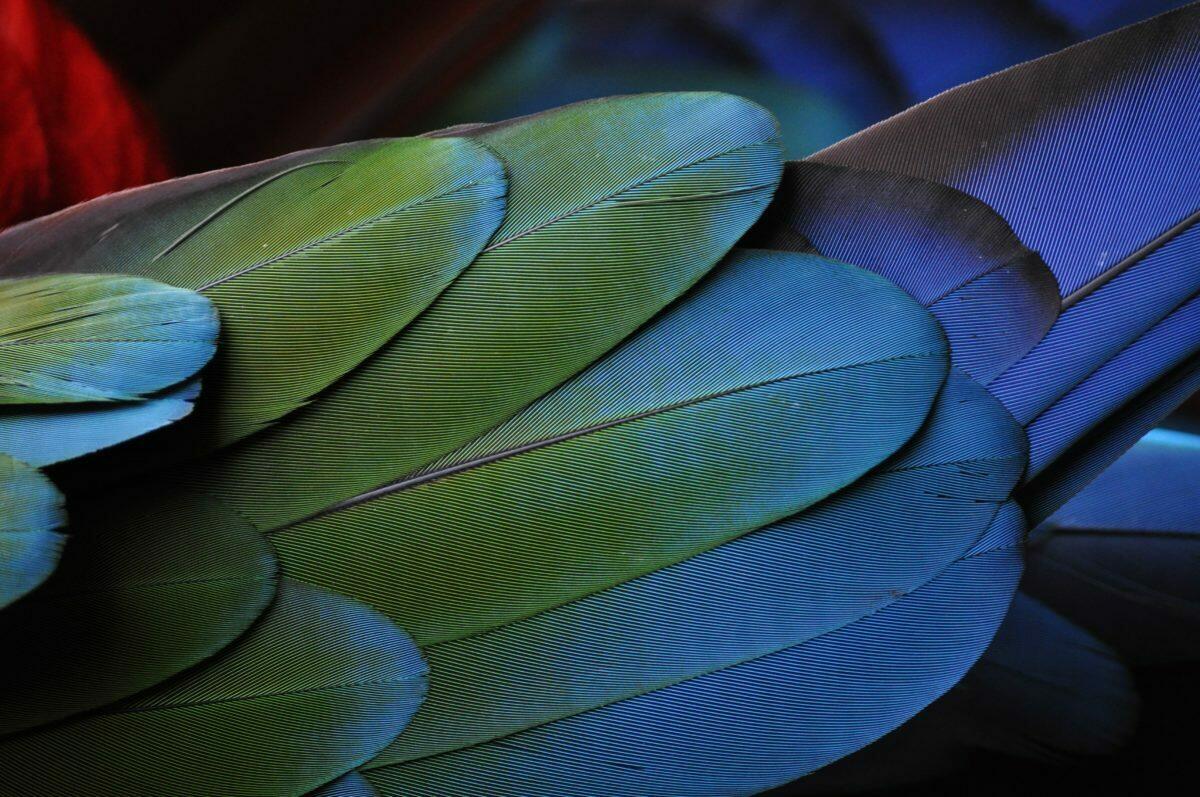
Memories and pleasant sensations flooded me. Colors returned and dazzled me – shimmering coral, the exact blue of a Bluebird’s wing, the delirious green of new grass. My beloved grandmother was there, sitting quietly, radiating her unconditional love. My brother long dead, so full of intelligence and wit gazed at me with affection. The stunning opalescent light of my birth city, San Francisco, enfolded me in the salty shimmer of the bay. Singing with friends, comforted by a herd of deer, running in moss; moments of deep play, swimming in warm ocean water. Smelled seaweed, horses, Plumeria; touched the honey colored pine walls of a favorite cabin. I fell back into endless summer afternoons, watched shadows, waves, insects, fish. All my long-dead cats bathed and purred beside me. I felt the depth of friendships with people I did not see often enough – we were still connected. Our separation was tenderly held here. All this was alive in the dark below.


Western Bluebird Blue

Qian Stayed

From this contented dark center, I took a new look at the place I‘d fallen from. Up there, in the light of day, I briefly practiced re-appearing . I sketched an image of my head popping through an imaginary portal into the light above. To my horror, I had drawn myself as a somber puppet head.
My zones had reversed – the place I had feared to inhabit was now alive and familiar, a pulsing, sourced center. Now the light of day flattened everything, including me. A deep reversal in my determining atoms had occurred. Something akin to a polar shift wrenched me around to see the truth and richness of my entire life. What I had held as deadly I now saw as vital. Had I received a turning word? I don’t know. Could I live in both places? Had Qian?

What about the Qian who stayed?

The one who is lying unconscious in her childhood bed. Did she fall into her own dark center to save herself? Was Qian returned to herself the way my ancestral dress was returned to me? This Qian who stayed drew me close in a sisterly embrace. I had thought of her as confined for years in a grey room between life and death. I saw now that she had sunk down and been protected and nourished by her ancestors. She had sheltered that hidden vastness that dwells at the center of every life. Held there, she allowed herself to return, lifting the father’s inadvertent curse.

Me too! An ancestor brought the dress made just for me. I allowed myself to put it on. The dark materials I had feared would snuff me out now rippled with the beauty and fullness of my life. I thought I had lost this dress, this gift, forever. Now I saw that was impossible. And so, yes, I could live in both worlds, because they were one in me. I had the freedom to choose my treasures, to ‘take them and use them however I wished!’ 

Qian and I could wear our dream dresses, we had returned.


Dear reader – If you like what we do and want to read more UC Issues:

Become a Patron!

The True Qian

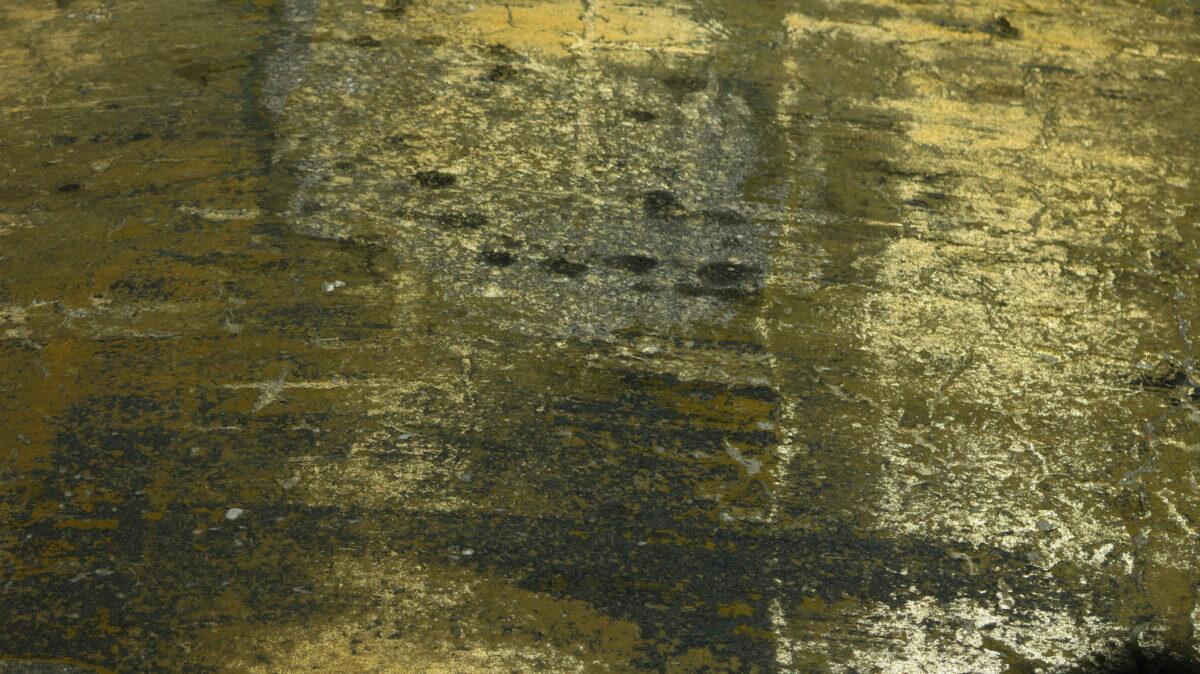
True Qian, 2009 © Allison Atwill. Charcoal on paper with acrylic and silver leaf. 24″ x 31″

Our own awakening is in the same realm as painting – In the way that while we are struggling to find/make the painting, something immense is looking for us. And when the piece finally comes to rest and is complete, when we look back, we can see, yes, this is how to make this painting. We discovered the directions by painting our way through. It is beyond our ideas of necessary and unnecessary steps, it is simply the way.

KOAN

Qian and her soul are separated.  Which is the true Qian?


Dear reader – If you like what we do and want to read more UC Issues:

Become a Patron!

Mario & the Fox

Whenever we are reunited with our soul others are involved. Sometimes those others don’t have a human shape. Mario da Cunha was generous in sharing on PZI Talk a small bit of the years-long relationship he’s had with a fox. At the end of his posts Mario would thank us for listening. We are thankful that he has been listening, a wide open listening, not limited to ears. – Editors

Baizhang’s Fox

A Teacher Appears


I live and work on a large piece of property in Santa Barbara. Many birds, trees and small animals live on this property and have been very helpful to me over the years. I’ve grown to understand how to belong from them, to take my place among them.

For longer than the six and a half years I’ve been here, one of the residents has been a lovely petite western red fox. The Hispanic gardeners, here for decades, call her “Mama”, or “perrita roja” (little red dog) affectionately.

I’ve seen her raise 4 litters of adorable kits over the years. On late summer evenings, when the light was dimming, I would hide behind a stone balustrade and watch the littles chase, joust, duck and roll all under the watchful eye of their mama and papa. If either parent caught a whiff or sight of me, a small yip would be sounded by one or both, and off the kits bolted for the nearest cover.

Over the years I’ve watched her as she has watched me. I started to feed her a bit when she looked too skinny during her mothering. Now that she’s at least 10 years old I feed her more regularly. It’s a thing we do together. The photo above is of her eating some roasted unsalted peanuts. Ted, the grounds foreman, and I call it her peanut face. Squinty eyes and a yapping chewing motion.

Over the years, Mama and the trees and all the others have taught me so much about the nature of love, community and belonging. Loving something just because it is, just the way it is. Including me in there as well.

Not sure what else to say.

Thanks for listening.

First, the Breakfast Protocol. 

Dana Accepted

Early each morning I listen for the crow calls on the large property where I live and work. The timbre and tone let me know if they’ve seen Mama fox and how near she is to the house. I warm a few ounces of chicken meat and add a bit of broth, warm a whole raw egg, and grab the big bag of roasted unsalted peanuts. I serve breakfast in a couple of different places depending on the work being done by the gardeners.

Roasted peanuts in the shell, a small pile of shelled roasted peanuts, the chicken and crushed peanuts at strategic places for the shy towhees and juncos. The bluejays (“cowlick” and “apollonia”) are daring enough to dart in and out while I’m laying out the feast. The small birds make their little noises under cover in the junipers and orange trees. The quiet crows line the cornice 20 feet above. Their respectful silence is out of character in my experience.

Mama first takes the egg, trotting off somewhere to bury it. She digs a shallow hole, gently places it inside and fills the hole by using her nose to push the earth. The crows then let me know that she’s returning with raucous jeering calls. Mama usually starts with chicken, then part way through the course, supplements with either the shelled or unshelled peanuts, then back to finish the chicken. When she’s finished, she moves away without the slightest gesture toward me. Full now, time to move on….

The crows, until now silently watching, now erupt in chorus of seeming excited calls at their turn at the bounty. They are the connoisseurs of fine dining, shoving and squabbling for every bit. The banquet table is completely cleared and cleaned by the last guests.

Sometimes, I wonder why I have the urge to write to you all about this part of the life I live. I sense that I have the desire, if that’s the correct word, to share something that touches me so deeply, to convey something of the way I crack open and the universe enters.

I often find that I’m engaging in an unconscious effort to “pave” the world and my experience in it with language. When I sit with Mama, or see weeds growing through cracks in the (my) pavement, then something unnamable is stirred and comes forth. There’s freedom. The landscape of this life expands in such surprising ways.

Thanks for listening.

(Editors’ note – Mr. da Cunha understands that foxes come in many shapes, some with eight legs. A weaver recognizes a weaver.)

Light in All Things

I am continually moved by the smallest things. This morning, after a difficult night following some difficult weeks, while sipping tea from a mug my daughter made in her childhood, a sister of the arachne family slowly creeped up the side of the monthly planner on the table. She, being the size of a dot used to top a lower case “i” in 24 point font, was just visible to me as she made her way across the month of August. Beginning on the 4th and leaving near the 24th. Across dates and activities that have happened and those yet to be. Traversing post-its, coupons, pieces of cornice stone, worn drapery tassels and finally onto the clear paper of the future date yet to be. As I watched her I greeted her with a “hello there” that likely sounded to her like very close thunder rumbling. The point I guess for sharing this is that the smallest of things offer great freedom for me. Boom. Like that.

Thanks for listening.

What is This?

Are You Listening?                                 

                                   Awoke today with many answers,
                                   luckily, a fox — just now,
                                   chased them away.

Thanks Dears

New Kits!

Fox Spirits

I emailed a friend a couple of days ago telling her about how there are actually eight kits and how watching them play around their nursery is like watching an English farce play — all the comings and goings from the large hedge — and how the baby foxes play all the roles. She said “…. the baby foxes play all the roles. It is thus.” Yes! We baby foxes play all the roles! Another way the subtle touch graces us all. 

So here is one of her kits, she ran all the way across the lawn with her mom for a chance at a chicken drumstick. The kits are solitary eaters. They grab food from their mum and sprint to evade their siblings.

After the food is gone, everyone settles into games and playtime. Mama might groom a couple of the littles that will sit still for it. Boo sometimes plays with her stepbrothers and stepsisters, but mostly she lays in the grass near Mama where they both stretch and scootch along the rough dry grass to scratch their sides and backs. Then after a bit everyone goes their separate ways. 

Something about all this touches me in a place where there are no words. Thanks for listening.


Invasive Species

A New Presence

This is a daughter of Mama Fox’s. Mama is the OG (original Guanyin). This daughter is sitting in the place, on top of the garden wall, where her mother usually waits for me on feeding days.

You know, I looked up these little creatures to find out more about them. They’re an invasive species brought to the west coast in the mid nineteenth century for their fur and to be prey for human hunting. I have a deep feeling for them and an internal conversation about supporting them. As a singular example of another invasive species I have mixed emotions. Maybe more on this later.

Anyway, I’m so struck by the lovely innocence of the expression of her face.

Thanks.


A Dear Friend

A Teaching That Lasts a Lifetime


Dear reader – If you like what we do and want to read more UC Issues:

Become a Patron!

To Love Without Shelter

Two Women – acrylic on canvas, 2019


To love without shelter,

Do we want that?

My paintings come from nowhere,

they answer some question that I don’t know I am asking. A color calls me and I begin.

Each painting is many paintings.

Often I cover good things. Too late!

Color entrances and moves me on.

At some point I give up. A fury arises.

I lose control and paint.

The second figure appeared behind the first. An odd angle. She stayed.

They stare at me.

I stare back.

I’m uncomfortable.
That must mean it says something true.

It’s an honorable task being human, to do the best we can.

So many people live with terrifying things.
In the in-between we live.

To love without shelter
Do we want that?
I could never figure it out.

Sacha Kawaichi


Dear reader – If you like what we do and want to read more UC Issues:

Become a Patron!

The Legend of the Blue Willow – Fairytale Qian

The Blue Willow Pattern – 1800’s


The Blue Willow Pattern, found in 19th century ceramic dishware, brings alive an ancient Chinese fairytale.

Long ago, in the days when China was ruled by emperors, a Chinese mandarin, Zuoling, lived in a magnificent pagoda under the branches of an enormous apple tree, shown near the center of the plate. The pattern is named for the willow seen drooping over a bridge, behind the graceful fence line. Zuoling had a beautiful daughter, Guangse, who he promised in marriage to an old but wealthy merchant. Guangse, however, fell in love with Zhang, her father’s clerk.

The pattern shows the lovers eloping across the sea to a cottage on an island. The mandarin pursued and caught the lovers and was about to have them killed when the gods transformed them into a pair of turtle doves. These doves are gazing into each other’s eyes at the top of the design.

A lengthy and old Staffordshire poem describing the pattern concludes with the verse:

“In the oft quoted plate two birds are perceived,
High in the heaven above:
These are the spirits of Zhang and Guangse,
A twin pair of ever in love”. 

 
Blue Willow China, in its present form originated in the United Kingdom (England) in 1790 by Thomas Turner at Caughley Pottery Works in Shropshire.


Dear reader – If you like what we do and want to read more UC Issues:

Become a Patron!

Goddess Dreaming


In the middle of the night
the dog
is watching summer lightning

In this issue of Uncertainty Club we have fire, water, the goddess, and long reads for the end of summer. 

The connection between Chan and the feminine feel for the world is ancient. It begins with an appreciation for beauty. The world is beautiful beyond liking or disliking. We never tire of the winter snow, the spring sunlight, the look in the eyes of a deer, a stranger, someone we love. Every moment is complete and holds all moments that have ever been or ever will be. The presence of here spreads out through our lives.

The early meditators in China thought of here as a kind of feminine presence from which everything arises. Everyone looks to mountains but the world actually comes from the valley, apparently unobtrusive, not asserting or exerting herself, something indescribable. That power, the Valley Spirit, is inexhaustible. And we depend on it without even knowing that we do, although it’s easy to see: the way the trail reaches up to meet your feet when you take a walk, the way the trees embrace the air, the sense of aliveness and deep solace you feel when you breathe and look around and see, “Oh I have a place in this mystery, I am this mystery.” Beauty catches us off guard. We reach out for wholeness but we already have wholeness, even in the reaching.

The Daodejing was written right at the beginning of Chan, and helped make Chan and Zen so different from original Buddhism. It describes the origin like this:

The power of the valley never dies.
It’s called the Mother-Deep.
The gate of the Mother-Deep
is the root of earth and sky,
gossamer like silk, always here unseen,
use it; it will never leave you.

(Version by Rachel Boughton)


In these pages:

Rachel Boughton has a lovely investigation of the European lineage of the valley spirit. She looks at the role of The Lady, the mother deep, the goddess, in the neolithic European world, and the implications of Marija Gimbutas’s archeological work on the goddess.

Joan Sutherland, who not by coincidence, edited Marija Gimbutas’s monumental book Language of the Goddess, has two pieces on the myth we are currently in. Joan is trying to reimagine the meaning we give to current events.

Dogo Graham, who teaches Zen and writes novels in Glasgow, has given us a poem.

Chris Gaffney has a piece about the Paradise fire in California which burned his land but not his house. 

Mario Da Cunha has three marvelous art pieces.

I have a piece on the enigmatic koan of a sieve being filled with water and also a poem about the dreams of an apricot tree.

Happy end of summer to all.

John Tarrant

The Stone Woman Gives Birth


Sleeping Lady (Malta, 4000 BC)


The stone woman gives birth in the middle of the night. – Zen koan attributed to Dongshan, China, 9th Century

I have a story to tell you, but it’s a story for which the words have disappeared.

The language in which the story could have been written existed long ago, in a time we call “pre-history.” The language left its footprints in certain rare loanwords that have no roots in Indo-European languages, words like thorax and labyrinth and absinthe and zither. There is also a written language, which we call Linear A, that is thought to be related to this early language. It is drawn on clay tablets that were first discovered 150 years ago, but no one has yet been able to translate the words. Is that, I wonder, because the language speaks of things for which we have no reference?

There are also old songs made up of nonsense syllables that are still sung in places where some of ancient culture still persists. These are said to be pre-Christian songs, and their words may not be nonsense, but some of what remains of these earlier languages. There are are intense, wild songs like this sung in Eastern Europe. It may be that some of the sounds of the old language came from the very origins of language when humans learned to speak from animals and nature. Which sounds were they? Perhaps water running, owls and songbirds, foxes and trees, roots growing down into hard soil. What do oceans talk about, or trees? What do predators and prey shout to each other in the night? What name does the doe give the fawn as it lies in the grass catching its breath? The language almost certainly knew how to speak of a culture with rituals and understandings and an ecology we have forgotten, including the way death is not an ending, and beings are part of each other.

I say we don’t have the language, but that’s not entirely true. We were all there. That’s one of the things that connects us. A part of every one of us was there, we developed in those times. The language and the stories are encoded in our DNA, and when we hear it again, we might recognize it. We can remember it in our bodies. It doesn’t take much to hear it, it’s just at the edge of attention, sometimes it only takes a smell, new grass, a baby’s hair, morning mist, to tip us off, so much do we long for it. So how could we have ever forgotten?

That’s the mystery. What happened?

The story is long, and from so long ago that some parts can only be intuition or conjecture. But can you see how it’s shocking it is, and then exciting, to imagine that things haven’t always been as they are now?

Venus of Berekhat Ram (Golan Heights ca. 300,000 BC)

Around 300,000 years ago hominids carved figurines of round women using volcanic stones, stones the size that would fit in your hand. We have found a few. Would you carry one with you? As an amulet or a companion? Would you hold it for luck? Hominids at that time weren’t known for making decorative art. They fashioned tools with sharp edges, this we knew, and a tool makes sense to us now. What sense do we make of this figurine? There have been many other figurines of women, and only women, hundreds of thousands of them, found in every age and every place, of stone and clay, mammoth ivory, wood, and later, bronze. You can see them in every archaeological museum in the world. So many of them have been found that it’s easy to imagine that a little doll like this was carried by everyone. What would that signify? Like the doll in the fairy tale of Vasilisa the Beautiful, did they feed them and ask them for advice and counsel? And who was she? And what did she know?

Venus of Willendorf (25,000 BCE)

The story I want to tell is also to be discovered in the artifacts that have not been found. For a period that lasted tens of thousands of years there is an archaeological record full of conspicuous absences. Here are a few: While we have discovered much art depicting life, people, animals, hunting of the times, there are no depictions of war between humans, not anywhere, not on any pottery or stones or cave walls. There are no weapons for killing each other, nor bones or skulls of people killed with weapons, and no protective fortifications around cities. There are also no special tombs for the rich, or for queens or kings or chieftains, although some there are some special tombs and grave gear apparently for priestesses. There are remains of major cities with populations of thousands, which lasted millennia, with innovations like indoor plumbing and refined crafts and agriculture and technology, but war and class seem absent. Nearly all the figurative art found from this time is of women and of sacred animals. Male figures are rare and aren’t in the foreground, are never larger than the women, and are often seen as companions or lovers. For at least thirty thousand years, across a vast continent, in hundreds of ancient civilizations, from the Semitic cultures and North Africa in the south, to the Celts in the west, to the Balkans and nearly to Siberia, until these civilizations began to unravel perhaps 4–5 millennia ago, these are the things we see, and what we don’t see as well.

If this is the way the world was, I wonder, why no violence? In the world that’s familiar to us, humans seem to do anything they are capable of doing. Where was the cruelty? Where was the organized destruction? Where was the greed? Why, in these cultures, for tens of thousands of years, is there no evidence of a consuming desire to be better or richer or more powerful than one another? And where are all the men, displaying their aggression and dominance? Was birth itself such a powerful miracle and metaphor? Was nature and a relationship with the earth enough? I have no conclusions. I’m full of wonder. These questions never fail to take my breath away, and when I sit quietly, I feel both sadness and an inkling that there are implications to the understanding that things haven’t always been the way they are now.

Seated Figure Giving Birth (Catal Huyuk, Turkey 6000 BC)

Stories from these times are a key to begin to break the code of more recent myths, like bread crumb trails through the forest. Here’s a familiar Christian allegory: God punished Eve when she ate the apple of knowledge, by making her ashamed of her body and by making her give birth in pain. Ah, so there was a real garden. When did we leave it? Why did we leave? Before that time, did we give birth without pain? There are Neolithic sculptures of relaxed women seated as if on a throne, giving birth calmly. What if there were no shame in having a female body, and every birth was a celebration showing the generative and regenerative power of the earth-as-mother? Would the context be so different, even our physical bodies be so different, that birth would be easy?

What if “Golden Age” wasn’t just a manner of speaking?

Allegories are everywhere, and I find I’ve begun to read the old stories differently. Even the story of the Buddha, whose mother died giving birth to him. As an adult he left the women and his newborn baby at the palace and went out into a world of men and strife and renunciation. Does this story point to a much older story? Is it one of the many stories that tries to give us hints that something happened?

It is hard to imagine how this history could be washed away. It’s as if there must have been a powerful effort over a period of time to erase the narrative (although it is not difficult to imagine that the new civilization, with values so different, would have wanted to erase it). In later mythology, the complex and nuanced stories from earlier iterations are written to make everyone a cartoon, and the Goddess a monster, or a harpy or a young and innocent fool. The complexity rises up through the cracks anyway: old, discordant alternative versions of the tales, and the stories told by the grandmothers, passed by word of mouth.

The question comes, so pertinent in uneasy times like ours: What forces could make such a brutal change possible, could create an environment where such a pervasive and powerful, creative and fecund culture could become a diaspora, could almost entirely vanish, sometimes in the space of a just a few hundred years? The geological record shows a change in climate: ice, then a warming, ocean currents shifting, flooding, drought. It’s easy to imagine that these were part of it, conditions that brought with them famine and disease. There were volcanic eruptions, too. Thera, a vast volcanic island that became the much more diminutive Santorini, was adjacent to Crete and was almost entirely destroyed around 1600 BCE, and may have been the source of the myth of Atlantis. Maybe these kinds of events were combined with some apparently benign development, like the domestication of horses on which nomadic raiders could travel great distances. Whatever happened, over the course of a thousand years, populations migrated away from cities, and figurative art died for centuries, along with civilizations and technology. At this time a new language began to replace the old one, and what had been known about the nature of reality became unknown, and eventually became silent. After a while, language and forgetting and cognitive dissonance made this old way of being nearly unknowable.

Venus of Brassempouy (Mammoth Ivory, France 22,000 BC)

I’ve never liked the word Goddess. Perhaps it had some sentimentality attached to it that rubbed me the wrong way. Whatever the reason, I’ve been examining its etymology. I found out that the word Goddess first came into use recently, in the middle ages, around 1,350 CE, and is a combination of the Germanic-derived God and the Latin -ess which means small or female. But further back, much further, you can find the Greek word Potnia (πότνια) which means Lady, a poetic title of honor. For Goddess there was the word Despoina, perhaps from Domus Potnia — the lady of the house, or perhaps De or Deswas, a title of divinity. This word Despoina was used like the later Hebrew word Yahweh. It is a stand-in for her real name, the name of the Lady, which was secret, and only told to initiates in mysteries. I don’t know if anyone knows the name today.

I take the loss of this word very personally, and I would like it back.

We all have a story to tell, and, like a birth in the middle of the night, there are no words for it. I’ll use the language I was born into, knowing that it can’t be enough, that the words will hold inside them the violence and lies against the story I’m trying to tell. I’ll talk about the pictures, and the sculptures, and I’ll try to describe things that are written in my genes, and in yours. Maybe hearing this awkward telling will make you aware of something you’ve always known. Maybe you will feel like you are coming home from a long exile.

I had a dream where I was looking through a clay bowl I had made. There was no bottom and there was a hole in the table underneath it and in the floor below that and I could see through the bowl, as if through a lens, the people moving around underneath, going about their lives, making things. And I could also see hundreds of gray rats moving over the floor at their feet, as if invisible to everyone, as if out of time, moving in the space between the seconds. No one could see them but me. And once I could see them, I could see them everywhere. There was a different reality existing concurrently. Rats are an ancient species; outsiders and survivors, they have the ability to thrive while hiding. They recognize danger, they feel emotions, they are altruistic and social. They laugh. The dream showed me the way it’s possible to see through things, that sometimes I miss this, but if I really look, it’s there.

Later on I had a dream in which I had laryngitis, and also couldn’t hear. I could speak but the words came out so quietly that no one could understand, and no one would stop what they were doing to listen. I was there but somehow not synchronized, not in the same time. Things had gone on without me.

It seems important to speak, and to continue speaking. To make art and to continue making art, to create relics for people in the present day, to encourage us, and to be found in midden heaps in 10,000 years. It’s easy to forget things and we live in a time where falsehoods replace reality at the speed of light. But that’s nothing new, the way our past can disappear; we are encouraged to forget, and then the remembering itself is an art.

The other thing that seems important here is what happens to us when we start to see that the foundation on which our reality stood is made of nothing. While it’s disorienting, it’s also exhilarating to experience how we’re connected to everything and everyone, in an unbroken line, held by ancestors who have felt the world in a different way. In meditation, in practices of attention, a space appears that reveals how trivial our beliefs really are. And in that space, possibilities can arrive. When we consider the likelihood that things haven’t always been like this, we can begin to choose to make something that has never been before.

That sort of creative gesture is going to be necessary, if we are to survive.

Postscript:

I first came across studies of these early civilizations through the work of Marija Gimbutas in the late 1970s. Her research and analysis and conclusions changed the way I saw the world. A few years ago as part of the editorial team for this magazine I came across a piece that referred to the myth of the maze of the minotaur. I had visited the maze, in Knossos on the island of Crete, in 1992. I was aware from the work of Dr. Gimbutas that the story of the minotaur was probably a bastardization of story of the original matriarchal civilization there, later re-written by the conquerors to obliterate the story of the previous culture, as conquerors often will do.

Some of Gimbutas’ later work and conclusions have been controversial, but she is universally respected by other archaeologists and subsequent research has served to strengthen her case.

I’ve also been thinking about the Eleusinian Mysteries, which were an initiation based on the story of Demeter and Persephone, and took place yearly in and around Athens, Greece, starting around 500 BC and persisting for over 1,500 years. Thousands of people participated yearly: women and men, slaves and free, including every great writer, thinker, statesperson, and philosopher of those times. Anthropologists now believe that these rituals went back at least 3,000 years, but finding any definitive beginning to the mysteries would be impossible, so ancient were their roots.

If you start to trace the artifacts and recent work of archaeologists and anthropologists and linguists and musicologists and climate scholars and ethnologists, and if you reread the ancient mythology and folk tales, the story of these ancient cultures becomes clearer and the resonance becomes more powerful. While lack of evidence doesn’t constitute evidence to the contrary, as in the evidence of artifacts not found, the conclusion that this was another kind of civilization and world view is compelling.

These stories and artifacts can be found elsewhere, in Africa and Asia and the British Isles among others, but the majority of the research is about the area that’s sometimes called “Old Europe”. Anecdotally it seems like this sort of civilization and these kinds of artifacts are to be found everywhere and comprise the universal origin story. I’m curious to find out if that’s so.

If you care to read more, you could begin with Gimbutas’ The Language of the Goddess, and the posthumous The Living Goddess. Her books are full of detailed drawings of artifacts that illustrate her points. It’s also easy to find photographs of the same artifacts online as well as thousands of others. These pieces are also on view at archaeological museums all over the world. If you travel, Catal Huyuk in Turkey is an example of a city that has been excavated and reconstructed in parts. There are the remains of ancient civilizations on Malta and of some of the other Semitic civilizations in what is now the Golan Heights. There’s also Knossos on Crete, which was the last known civilization of this kind, persisting until 1100 BC.

For a well-considered point-by-point refutation of the Gimbutas deniers, I recommend an article written by the Swedish archaeologist Erik Rodenborg in 1991. It is available in the original Swedish, or in a condensed and translated version, courtesy of Maria Kvilhaug. 

For a beautiful book about our hominid musical heritage, with a chapter on the music of Old Europe, read Sounding the Depths: Tradition and the Voices of History, by Dr. Victor A. Grauer.

For recent scholarly work that supports these conclusions see Menotti & Korvin-Piotrovsky 2012; Anthony & Ringe 2015; Lazaridis 2014.

For a very complete exhaustive history of women, with an exciting bibliography, read Marilyn French’s From Eve to Dawn, A History of Women in the World, Volume I: Origins: From Prehistory to the First Millennium (The Feminist Press at CUNY, 2008) with a foreword by Margaret Atwood.

The Origins of Greek Religion by B.C. Dietrich ( (Liverpool UP, 2004), talks about the early roots of what we usually think of as Greek religion and mythology.

For an example of a modern Ukrainian vocal/instrumental group performing a pre-Christian song, probably derived from the old language, listen to Dakha Brakha.

☸︎ ☸︎ ☸︎


Update: The Potnia Project
Summer 2019

The idea of an undocumented history of cultures that are very different from those of the last 2,000 years has been lying fallow in me for over four decades, but in the face of the 2016 presidential campaign and election and a need to respond, I found myself heading back in that direction. For a while I had been responding to the political situation out of my outrage, gathering information about what may and may not have happened, trying, in my own small way, to help disseminate information, but eventually I lost the taste for it. I wanted to find a way to move forward with a vision that went beyond opposition, toward something powerful and transformative. Perhaps I was looking for the conspiracy beneath the conspiracy, which is just a way of saying I was trying to find out about something buried in the unconscious of the culture, and hidden in my own deep psyche.  What came out in this article was tremendously encouraging, to me and to a surprising number of people around me, both women and men.

Since writing this article I have been educating myself further about the things I touched on. Most of the burning questions in that piece — what happened? Why? — are still my burning questions, but I have gathered more of the considered opinions regarding them. There’s more evidence and information out there than I could have imagined and I’m just beginning to get below the surface. I have also been exploring cognitive biases that help to explain how we forget and misinform ourselves. Each time I read the word “discredited” I follow up and read carefully the writings of the “experts” who are being cited. They are mostly in the general category of what Gregory Bateson terms “Everybody knows what everybody knows,” with varying degrees of sophistication.

“What I tell you three times is true.”    – Lewis Carroll, “The Hunting of the Snark”

I continue to follow the breadcrumb trail through the woods when I look at the old and recent work of archaeologists and ancient historians, people who hold bits of the history. The crumbs are getting closer together and I’ve started to gather them, and discover others who are as well. Among the surprising discoveries: a blog post about soldiers returning from the Middle East, talking about how the “goddesses” of ancient Egypt were actually real flesh and blood queens with the power to determine who the Pharaohs would be. Or a mainland Chinese website that told the story of a famous female general of the Shang Dynasty (2000 BCE) who was one of the most influential and powerful of her time, right at the edge of the time when women’s roles in China began to be circumscribed and diminished. There are lots of academic papers by modern archaeologists re-examining the meanings and cultural assumptions we’ve projected onto relics and grave goods, and finding ancient cultures with very different values and structures. I also found a translation of an old Norse verse from the Poetic Edda, the Völuspá (Prophecy of the Witch), that makes reference to the time when the Norse pantheon was faced with the first (ever) war:

“Then all the powers went to the high chairs of fate, the sacrosanct gods, to discuss this: Who had blended the air all with harm? Or to the devourers kind given the Poetry’s Maiden?”

Ah, that’s my question exactly. And was there a time before war? And what happened to end it? 

We humans are afraid to believe things that go against our previous understandings, no matter how well-supported. We like what we know even if we don’t like what we know. There is a lot of evidence that there existed in the history of humans a different kind of world, and that our ancestors understood human nature in a radically different way than most of us do now. And, as I said in the article, even lack of evidence isn’t evidence to the contrary. There’s so much that’s still a mystery, so much we need to learn again as a species. Evolution is not proof that the world is as it should be, nor that something very different never existed. Being adaptive in the past doesn’t mean something will always be adaptive, and large changes have occurred, and will occur again. I breathe better when I notice this is possible. 

In the last few years I have been making figurines and small animal vessels out of clay, letting my hands tell me what to do. I have been following my body, my intuition. I like this research in all its forms, it’s what inspires me: to find the ways in which we haven’t lost the legacy of this other world, the one that held us for hundreds of thousands of years. I am looking for the past that shows us there’s a way to have a future.

☸︎ ☸︎ ☸︎

A version of this post was originally published on Medium and on Zen Notes, Rachel Boughton’s blog.

Dreaming the Invisible


The attic framework of Notre Dame, known as ‘The Forest’

When the foundation stone for Notre-Dame de Paris was laid in 1163 everyone, architects to stonemasons, knew they’d be working on something that neither they, nor their children or grandchildren, would live to see. They couldn’t be certain that the engineering would hold, or what the light, filtered through rose windows into a stone glade, would be like.

As the walls rose course by course, carpenters prepared the lumber for the roofing. It took half a century to fell the oaks, lay them down with their heads in the north to align with the Earth’s energy, strip their bark, submerge them in swamps to preserve them from rot, cut them into beams, and set them out to dry. The attic framework made from these beams was called ‘the forest’ — not the three-hundred-year-old wild forest from which the trees came, but one made by humans, which would last another seven hundred and fifty years, until the fire this spring.

It took a century to build Notre-Dame, and it looks as though it will take about the same amount of time to end the world as we’ve known it. Deep in a climate emergency, those of us who could do something about it can’t seem to muster the collective will to respond. The agitation of the elements — rising waters and winds, spreading fire and dust — is devastating to some. Others mock the warnings and profit from pushing us closer to specicide. Hopeful things happen, but not enough of them, and not quickly enough. Have we lost the stonemason’s belief in the invisible future, the carpenter’s almost ceremonial preparation for it?


Many more of us once had relationships with the rest of the natural world that included mutuality and respect. Native Americans renewed prairies with fire, British farmers planted hedgerows to protect the soil. We’ve been kin to grizzlies bringing salmon inland from the rivers, leaving the remains of their meal to fertilize the great trees. We’ve acted like the fungi that grow along tree roots, tapping them for nourishment and transmitting information through the grove. If just for a moment we considered not our aspirations or our fears but what we’re actually doing, it looks as though we can’t hold up our end of the relationship anymore. We can’t seem to stop ourselves from causing harm. Are we as a species worn out? We’ve had cave paintings and symphonies, tenderness and mysteries — and are they completed now?

Perhaps, after all, the story we’re in isn’t primarily about us; perhaps it was always the story of the Earth. Perhaps the Earth’s dreaming of us is fading away, and because her dream is such a very long one and we are so fleeting, we don’t know it yet. Is that why we’re having such a hard time dreaming ourselves into the future?


Tony Hoagland wrote a poem called “Peaceful Transition,” which another poet, Marie Howe, said was “soaked with grief for what men have done to the living world.” He prayed that if “the time of human dominion is done, / … the forests grow back with patience, not rage.” Tony Hoagland was nearing the end of his own life, and one of the things he found there was a quiet prayer for mercy. It undid me, the nakedness of that request, its hope for the unearned kindness of the living world as its dream of us comes to a close — a close that will still take a rending century or two.

It seems a lot to ask, considering. But don’t we have to ask it for our children, and for all the people who would have done things differently, if they’d had the agency? And perhaps we can offer, in exchange, the courage to put down for a moment everything but our own naked grief, feel it all the way to the bottom, and find there what it asks of us.

At the foot of my bed, a small member of a four-legged tribe who decided to cast their lot in with humans waits, mostly patiently, for his dinner. What will happen to his kind? Will they return to some older version of themselves, from before they trotted into that firelit casino? What of all the creatures, all the ecosystems, we have altered and destroyed? If we fall out of the Earth’s dream, will the nonhuman survivors gather on every drowning continent to hold a Ghost Dance, calling back the spirits of their murdered kin?

The ocean just beyond the foot of my bed will go on when we don’t, and once we’ve stopped poisoning it, it will heal and grow new life, in the immensely long ages of its own living. And if, some aeon far in the future, humans emerge again from the waters to walk upon the land, the cultures that are like fungi and grizzlies will be the first to return, and with any luck that’s where it will stay for a very long time.

As for the cave paintings and the symphonies — all the testimony we might offer in our plea for mercy — they would not be diminished by our passing. They remain among the universe’s lovely creations. Just for a moment, for what it’s worth, I want to dedicate them to clouds and waters and mountains, to all those who swim and fly and lope across the Earth’s long dream.


April 2019

House of Fire


A letter from somewhere near Paradise, 2018.

‘I take what work is on offer’ – John Tarrant

Dear friends –

What a wonderful community you all are. I would not have thought that being held would come through so strongly over the electronic aether. A report this morning from a crazy, wonderful neighbor – Tommy Slattery, let his name be known –  who stayed the night through the burn-over said, ‘some places are gone, some places are standing’.

So I don’t know. The yearning to know – Is it gone? Is it standing? Is there anything in my life that I don’t yearn to put into this dualism? I just want to know – even if the news is bad. But I don’t know. What IF this were the true nature of things? All knowing riding on the great deeps.

 My house, like all my endeavors, has a story to it. A long, shaggy dog story – filled with drama, exuberance, depression, and beauty. I had already begun to tell the story forward – that my son would inherit the house and land, that my daughter and her husband would move to Chico and visit me on the ridge. Maybe that all might happen, but the fire is always on the ridge line. It was some sort of personal fire that caused me to be living on that ridge in the first place.

I just had extensive drainage work done around my house, since the crawl space turned into a lake for months due to the heavy rains we get up here. Yes, it will soon begin raining – we get 40-80 inches a year. But first things first – get the fire finished, then start on the flooding. I may well have a well-drained ash home. This would be the second time a home burned on the foundation.

Fire always reveals something. When I was evacuating I realized I had no idea what to take. Everything seemed to be of nearly equal value. I have hundreds of books, many of which I have hauled around for decades, but gave no thought to trying to save them from the fire. Standing in my closet, looking at the motley collection of clothes, picking and choosing which shirts and pants to take, I began laughing at how absurd it was. I ended up grabbing art from the wall – including the great Boogey Man print by Michael Hofmann. I thought I could begin a new home with art from friends. And art is easy to carry and fits into a Toyota Corolla.

Yesterday, driving around the back roads on the ridge, getting spectacular views of the fire. Because of the winds, the sky was completely clear, no trace of smoke smell, yet a mile away the fire raged, apocalyptic skies loomed above. A grand, beautiful day for sightseeing the end of the world. The great Earth can tip so slightly and easily into a state that appears as conflagration to mammals such as myself.

Bobcat – NPS – Keith Geluso

On that drive I passed both a large coyote and a bobcat right next to the road. In each case I slowed my car to a stop and we regarded each other. We were in the same situation. We are always in the same situation, though I often don’t recognize it. I continue to think there is a refuge from the fire, but the coyote and bobcat have not the slack for such fantasy. To be a witness to the beauty of the wild creatures, and the awful beauty of the fire – good work if you can get it.

Love, Chris

Cloudy But Bright Inside


Cloudy but bright inside, like a moonstone.

Beethoven’s original score for Piano Sonata Op. 15

We are always trying to know, but it’s not knowing we depend on. We try to expand what we know, and to work with what we know, but everything that we love comes out of a place of not knowing.

Where do ideas come from? What about songs and art? And how do we know what we love? One way we discover what we love is that little bits of the universe speak to us. The bits don’t have to be beautiful—a corner of a building, a patch of sky, the rhythm of a child’s feet running—any piece of life will do, and what makes these little pieces appealing is entirely mysterious.

Serendipity is a helpful idea here, because it refers to finding, by accident and sagacity, things that you are not looking for. The need for sagacity indicates that you have to be paying attention to notice a good idea when it occurs. Serendipity indicates that life is larger and stranger than we imagine, and that there might be mysterious and invisible connections between things.  When we notice connections between the separate bits of life, they make us happy. In stumbling on connections, we learn to rely on what we don’t know.

The important thing is to make discoveries that you are not looking for. If you find what you are looking for, you are still a familiar person in a familiar world, doing routine things. The Chinese knew about this problem, and invented koans as one solution. In the Zen tradition koans are little stories and questions that lead into uncertainty and depend on not knowing. Silence and stillness are interesting because they allow the mind to settle until the right course of action appears. When I am quiet, life reveals itself to me, and who I am begins to change and open. When I find what I’m not looking for, I become unknown even to myself.

When we are not doing things to acquire something, we are not manipulating the world to get things or people to get love, then we are just living, and freedom appears.

People call sitting in silence ‘meditation’, but meditation is really just listening to your life. You ally with the forces of serendipity by getting out of the way. In the midst of doing, there is a way of non-doing. It has silence and waiting in it. The Chinese told the koan stories and said that even hearing such a story might change your approach to life. Everyone knows the way a chance remark or snatch of song can change your mood. The koan stories shift your feeling about who you are.

“Moonlit Road,” by Edward Steichen – 1910

I live in Sonoma County, among the vineyards North of San Francisco, and at night I hear great horned owls calling. When the sound enters me, and I really hear it, everything else disappears and there is a feeling of being at home in the world, of having my place in the larger story. The current of life carries me along. I can’t use this great current for any purpose, but at such a time there is no limit to the joy of being alive. Even reaching for peace is itself a kind of peace. Entering these moments is caring for life, not just my life but all life.

One time, I woke in the night as I often do and sat in meditation looking out at the garden. The dog sat beside me. It was a foggy night and the moonlight had penetrated the fog and was reflecting back from it with a diffuse glow—as in Marianne Moore’s poem, “The Magician’s Retreat.”

Cloudy but bright inside,
like a moonstone

The pale flagstones and vines were softly visible, along with the shoots of the lime tree. Everything was quietly alive. I was not clear about the edges of things or even my own edges and noticed a koan, which I had been dreaming about during sleep, was continuing to repeat itself now that I was partly awake.

The story was the koan of the sieve, here it is:

A small group of people met every week to talk about koans, they kept company with koans. This seemed to work well enough. Then they invited a teacher to instruct them. The teacher told them that they could have a regular practice, develop a feeling of tenderness and appreciation for everything alive, and not be so caught up in their reactions to things. The explanation of meditation was like this: “Realize the light that runs through all things. Realize this wherever you are and whatever you are doing, so that meditation becomes seamless and you can’t tell the difference between meditation and anything else that’s happening in your life. It’s not hard. Fill a sieve with water.” Then the teacher left.

They followed these instructions as best they could, different people being affected in different ways. Their lives changed and most of them were happier and less troubled by their thoughts, more open to what came to them. But there was one woman who was deeply touched by the image of the sieve and of the fairy tale task of filling it with water, and the story wouldn’t leave her.

So after about a year, she traveled the day’s journey to the coast to see the teacher. She arrived late in the afternoon and told her story. The teacher said, “Well, it’s late. Why don’t we let it rest here, you can stay the night, and in the morning, we’ll look into this.’” She spent the night in the guest house, hearing the seals barking, and the next morning, the teacher said, “Come with me,” and they went for a walk. On the way they made a detour through the kitchen where the teacher picked up a large sieve. They went down to the beach; it was a calm morning, small waves ran up on the grey rocks and fell back. Silently, the teacher handed her the sieve. She was excited and confused, as if something were trying to be born. Impulsively, she knelt down and her jeans got soaked and she scooped the cold water into the sieve with her hand. She was happy doing this and the bottom of the sieve glistened, but the water ran right through and back into the sea.

She stood up and passed the sieve back. The teacher took the sieve and threw it out as far as he could into the waves where it floated for just a few seconds and sank. At that moment her heart opened, tears came, and she understood that she was at home and could be happy.

So that’s it, we thought we were separated from the world and we are held in it, and saturated with it. We’ll get what we want whether we get it or not.

The koan of the sieve is a journey; it draws the heroine along to the shore of resolution. We accompany her and as the images transform, they take the material of our lives and bring about changes in us. A woman who heard about this koan told me that it brought recent grief to mind, all her watery losses—the marriage, her sister, her brother, her dog. And then something else happened, in her meditation, the sieve became a red colander which rose up in the sky and the bright sun shone red through it.

There are two fundamental conditions: In the first, I’m separated from myself, desolate, uncared for, far from home, trying to fill a sieve with my hands. In the other situation I’m immersed in the world; everything I see, hear, taste, smell, and touch, comes bearing its own meaning and beauty. When we experience this, it’s as if we were always inside the world and playing our true part in it, but we don’t necessarily notice this. Whether we strive for outcomes, or whether we are touched by sorrows, the external circumstances are not themselves the main thing. To be carried by life, to be saturated with it, is itself a kind of song.

Each life is complete but sometimes it’s hard to let it be so. It is the strangest, most difficult truth that life gives us what it gives us, without regard for our intentions, our kindness, or our devotion. We can accompany each other on our journeys, but there is no real protection, and there is nothing we can know or hold onto. We are always sinking into the ocean, and though our schemes are part of life, they don’t protect us from it. And in the midst of this nakedness we can be at home.

There is no life without holes; even if we try to fill the sieve with our hands, the starlight, the wind, and the sea pour through us. The little bits, the sights and sounds that appear, each one comes out of the not knowing and contains all of life. It is ours, it’s for us and if we say “No” to one part of life that “No” gradually seeps into everything.

As I sat with the Border Collie that night, the great horned owl called, and when she went hunting, I heard and felt her wings inside me. I had the feeling that something had already arrived or was here even before I’d finished wondering if it were here.

And I remembered some lines that had come into my dream shortly before:

The sieve is in the sky now,

and filled with the stars.

The dog and I continued to look out into the garden, the fog, and the moonlight.

Invisible Ceremonies


The Dodo, from a painting by Avian paleontologist Julian Hume, The Museum of Natural History, London.

Memorial Day 2019

A day of remembrance. How do you memorialize something that hasn’t happened yet? The United Nations says that a million species could go extinct in the coming decades. What will that look like coming across our news feed? Imagine that the extinctions are announced one by one as they occur : How many alerts per day will that be?

My piece “Dreaming the Invisible” spoke to grieving these losses, including the possible end of human life on Earth. Grieving doesn’t keep us from acting, but it changes how we do so, in ways that make a great difference. Here’s what I’m wondering about : Whatever we’re doing now isn’t working, since we’re still headed for the cliff; and something is preventing most people from engaging with the emergency, despite all the warnings; and it’s possible that an important part of that something is a fear, conscious or unconscious, of the sorrow to come. Perhaps it is not grief that weakens us, but all we do to avoid it. Perhaps we need, instead, to include it.

Grief has strengths that are different from those of anger, as water is different from fire. Many contemporary cultures tend to valorize what some consider masculine traits over what some consider feminine ones, which means fiery virtues over watery : outrage over sorrow, assertiveness over receptivity. Is grief seen as feminine? Does it feminize us to feel it, and is that one of the reasons some are afraid of it? Anger tends to feel for (I don’t like what is happening to you and I want to change it), while sorrow tends to feel with (your pain is my pain, and I care about it). Feeling for and feeling with complement each other. If we valued both, we’d be able to employ fire or water according to need. They could temper each other, and combine in as-yet-unimagined and powerful ways. Each of us would be able to draw on more of ourselves in response to the crisis; each of us would have more with which to strengthen and console ourselves.

Canadian soldiers, Remembrance Day.

We see the results of fiery action all around us, for good and for ill. I’m wondering if at least some of the burning rage so characteristic of our time is actually a defense against grief. I’m wondering if free-floating, unacknowledged sorrow is a larger influence in our communal life than we give it credit for. If that’s true, perhaps we should spend some time with sorrow and grief and mourning, here at the end of the world.

☸︎ ☸︎ ☸︎

Grief is a buddha. Not something to learn lessons from but the way it is sometimes, the spirit and body of a season in the world, a season of the heart-mind. Grief is a buddha, joy is a buddha, anger is a buddha, peace is a buddha. In the koans we’re meant to become intimate with all the buddhas — to climb into them, let them climb into us, burn them for warmth, make love with them, kill them, find one sitting in the center of the house. You’re not meant to cure the grief buddha, nor it you. You’re meant to find out what it is to be part of a season of your heart-mind, a season in the world, that has been stained and dyed by grief, made holy by grief.

A long time ago, a young woman is lost in mourning after the death of her husband. She leaves everything behind and goes to a monastery to ask for help. “What is Zen?” A teacher replies that the heart of the one who asks is Zen : Her broken heart is the buddha of that time and place. She decides to stay and find out what that means. Sitting in the dark, the woman runs her fingers over the face of the buddha of grief, learning its contours. Over time, she discovers a kind of grace in that dark, with grief as her companion : a deep humility, a deep stillness, a deep listening. In its Latin roots, grieving is related to being pregnant.

One day the woman hears the cry of a deer from a nearby stream. “Where is the deer?” the teacher asks. She listens, concentrated, ripe with something. “Who is listening?” The ripe thing bursts in her; the deer’s cry echoes through the trees and rises simultaneously from her own scarred heart. She is there, cloven hooves wet, and she is here, wondering —and everything is listening to everything.

Later she is at the stream with a lacquer bucket meant for flowers, only she fills it with water. She sees the moon’s reflection in the water : her grief, radiant. Later still, she says, the bottom falls out of her bucket : water and light soaking into the earth. All that wet : the stream, the watery moon in a bucket, the deer’s moist eye, the woman weeping.

Her tears become a solvent for what is unyielding within, the defenses we erect to keep from feeling the pain of life all the way through — which also keep us from feeling its beauty all the way through. The tears soften, unstick, breach, topple, and fill. They run like water under the ice, and suddenly the frozen is flowing again.

Some people fear this kind of dissolving : Will I still be me? Will I disappear or go mad? Will I be able to fight climate change? If we begin this weeping, if we open ourselves to the pain and the poignancy and the terrible, wounded beauty of life on this Earth, perhaps we won’t be able to stop, and we will drown.

We do not disappear, nor do we drown. Neither do we cry forever. But if from time to time these tears are called from us, they’re no longer frightening; they are a small ceremony keeping us close to the world. They make us less brittle, more resilient. We weep because something is pouring in and we’re overflowing, because it is impossible to say anything in some moments and it is equally impossible not to offer something back. The salt tears are remnants of our oceanic beginnings, and they are also the residue of the difficult sea we cross in this life. We contain both, the timeless depths and the waves washing over the fragile raft that carries us from birth to death.

Photo – Max Ellis / Caters News

The woman in the story, whose name is Mujaku, went on to accomplish great things, helping other women meet their own hearts. Generations of nuns wrote poems about her; one said that the water from her bucket filled many puddles. She was able to do this not because she found a way around her grief, but because she went quiet inside and listened for what grief was asking of her. Her cry for help, the cry of the deer, moonlight pouring from a broken bucket : her grief spread further than the edges of her skin, belonged to more than her particular heart — and so did her awakening. As she was held, so could she hold.

That is what awakening is.

☸︎ ☸︎ ☸︎

Grief is a form of love, how we go on loving in the absence of the beloved. It is the transformation of love through loss, and how we are initiated into a new world. Like all initiations, it begins with a purification. In the case of grief this can be particularly intense, because the loss of what we love is so intense : sorrow, memory, rage, regret, tenderness, depression, gratitude, guilt, fear, paralysis, longing, disappointment, betrayal, relief. We are scoured by gales, the old life stripped away. The grief of our time is a strange one, because in some part we’re mourning what will disappear in the future. The loss won’t be sudden and unexpected, like a plane crash. We have predicted it, it will go on for a very long time, and, even as we mourn, we’ll try to salvage as much as we can.

Eventually we might find our way into the eye of the storm, as Mujaku did. There’s a difference, though. In Mujaku’s time it was possible to love the natural world innocently; her awakening is entwined, in an ancient and uncomplicated way, with deer, stream, and moon through the trees. She could take something for granted we can’t anymore, that the natural world will, eternally and self-sufficiently, be here to heal and open us. We can no longer love the Earth innocently like that, ignoring the effects of the way we treat it. How do we love now, past innocence? How do we stay with that love even when it near kills us with hurt? Perhaps letting loss stain our love will help, because it will keep us closer to what’s actually happening. Perhaps letting remorse stain our love will help us do what a genuine love must do now : acknowledge our debt.

Peter Hershock once said that remorse is the foundation of morality in the koan tradition. He didn’t elaborate, so I’ve carried his thought around with me since. As best I understand, remorse begins with listening without interrupting, and then feeling with, experiencing the pain I’ve caused as my own. The natural result is a desire not to do whatever it was again. And so remorse becomes inquiry : How did this happen? How can I keep from repeating it? How can I make amends?

This too is the activity of love. Grief is how we love in the face of loss, remorse is how we love when we’ve caused harm. How could they not be part of the work of this time? Right now it is difficult to imagine loving the future we believe is coming, but someday soon we will have to. How can we if we’re still drenched in unacknowledged grief, if instead of attending to remorse, we’re lost in guilt and denial?

We don’t cry forever. Grief changes, growing from its wild beginnings into a kind of dignity. Remorse becomes a noble companion. They fit the season — as unexamined innocence no longer does, as outrage only partially can. We can’t know from here what our love of what’s coming will look like, but we can decide how we’ll walk out to meet it.

Eye of a Salmon

☸︎ ☸︎ ☸︎

Right now we are so pregnant with the future, pregnant without entirely knowing what’s about to be born. We’re entering a great mystery together. We bring to this invisible ceremony our warrior skills, our hungers and our strivings, the genius of our minds — all the things that got us here — hoping we’ll do something different with them this time. Perhaps we could also bring washed hearts humbled by what we have done, and a willingness to follow love wherever it takes us, as we step into the great ceremony of the rest of our lives.

Invocation


It opens and it closes,

it opens and it closes

and it is always open

and it is always closed.

It opens and it closes

and it does not open

and it does not close.

It always is

and it is never

anything or anywhere.

It is.

The taste of an orange,

the smell of cooking soup,

a hand touching naked skin,

people waiting at a bus stop

on a morning of steaming rain.

Birds Disappearing Among Clouds

This autumn-
Why am I growing old?
Bird disappearing among clouds.

– Basho

Bird Disappearing Among Clouds – Acrylic on birch panel with gold leaf – 36″ x 48″ – 2008


Painting detail


Field Notes

“Freely I watch the tracks of the flying birds…”

I have been carrying this koan around throughout the winter. It appears when I notice the brush strokes of the sparrows and crows across the winter sky, which is sometimes gray and sometimes a burning blue. But the birds accept all colors as the back-drop of their lives. I find I think of this koan during difficult meetings, standing in a long line at the drugstore, when my car needs repair for the third time, or looking at my unwashed dishes. It reminds me I can always be free.

– Maureen McGuigan

Freely I watch the tracks of the flying birds

Freely I watch the tracks of the flying birds

Xuedou


The theme of this issue is a line from an ancient Chinese poet. The line is in our koan curriculum, which means that we meditate with it and see what it offers us, and where it takes us.

It appears in The Blue Cliff Record as a comment on this koan:

Yunmen said, “I’m not asking you about before the full moon. Come and say a word or two about after the full moon.”

He responded to his own request, “Every day is a good day.”

Through thousands of years, watching the tracks of the flying birds has been a meditation. When I watch birds nothing needs to be mended, there is nowhere I need to go to. We are here, there is just sky and birds. We become the host of whatever appears. This seems to be respectful of life.

It’s enough just to see, to make room in the moment. I myself have become a little diary entry for the birds: Flew by the man meditating in the garden, dodged the hawk, that sort of thing. Each bird is a large moment, in which the world looks up and I look back without demanding anything, just meeting. An unreasonable joy rises at each meeting.

Pelicans ride waves in the air, and splash their wings to herd fish, a large crane angles between masts in the harbor. A raven comes over, close, closer—just inspecting and saying hello, one of her tail feathers is at an odd angle. The owl flies silently, silently, the big awkward wings held straight out in the twilight. Hummingbirds chase each other, hurtling straight up like Blue Angels, jeweled stunt flyers, called in Mayan, ‘ts’unu’um,’ the sound they make opening and closing the air. Yellow breasted finches tumble together through the golden leaves as if they are one mind, a mind that is always stretching and reshaping itself.


Tracing the flight of Yellow Storks – with permission from photographer Xavi Bou

Also I feel the wings rise and fall and I rise and fall with them. Then I feel the birds fly though me. Then I change places with them, and I too fly. Space-time expands and the finches fly through me as well as through the apricot tree.

When I make room In the moment anything can enter and become complete. A lovingly polished big rig from the Central Valley drives though me. There is mayhem and sorrow and they go through me, too. In the vast engine of life, I have always been here. I too am a hummingbird.

In Thousand Oaks there was a mass shooting in a bar and then almost immediately the wild fire came. The point of Thousand Oaks is that it’s safe, nothing is ever supposed to happen. So I checked on one of my friends there and she said she had just given a talk at the University of California and she was doing pretty well, considering.

I really I am in good spirits. I do feel a real reserve, I don’t mean a stepback reserve, it’s more a reservoir from…all this wandering in the dark with the koans, the No koan and the dog, and the Buddha’s hands and the killing heat and cold.

What I think about meditation isn’t so important. The thing about meditating is that it’s indistinguishable from mere being. What I think about anything isn’t so important.

Everyone is waiting for the world to go back to normal which is why people look at election polls and stats and scan the news several times a day.

I too was hoping for a kinder, less violent culture, and that everyone would understand that when birds fly, they fly through our hearts. But it will have to be enough for us to understand that madness, difficulty, hope, and sorrow hurtle through our own hearts and fly around like birds.

The world lacks interest in my hopes and fears. The old idea of the Bodhisattva depends on not objecting to this lack of interest. The Bodhisattva accompanies people, in full knowledge that there is nothing solid for any of us to stand on. Instead we see a smile in the street, the brown, blades of autumn grass, a sick child laughing. Every day in the smallest most disregarded thing, it appears—the luminosity of great wings.

We’re all watching the tracks of the flying birds, adjusting our feathers to the downdrafts.


Kentucky


All week I had been in Kentucky, where turtles dodge raccoons among the oak leaves. Now I was leaving.

Several times on this trip, men called me “bud.” It’s interesting that old men don’t use this language with me. It is almost always men only slightly older than I am. I remember using “bud,” too. It’s the sort of language that frat boys, who I once aspired to be like, use to assert subtle dominance over others. I remember telling people not to call me “bud.” I remember fighting over “bud.” Today, I just smiled at the offending TSA agent, but my smile wasn’t true and added to a speedy, alien feeling in my body.

Just before leaving for the airport, I had gone for a walk. At first I planned to visit the Muhammad Ali Center and an art museum called Speed, but Muhammad and Speed evidently don’t like Mondays, so I headed for a state park with waterfalls instead. A couple of people told me about a former train bridge converted to a pedestrian walkway that would lead me from Louisville to my new destination, the Falls of the Ohio, across the river in Indiana.

My teacher had presented at an inter-faith conference all week, and I attended to her. Much of this attending is stagnant and I wanted to move. I was going to take a car to the falls, but walking seemed wiser. The idea of safety crossed my mind, followed by the assurances of my teacher’s friend. He said Louisville was safe, except for a few neighborhoods taken over by opioid addiction. I was unsure of this new friend, unsure if his words were also code for poor, brown areas of the city. I kept quiet.

Walking, I carried the speed and unease, aware that safety for me wasn’t exactly the same as safety for my teacher’s friend. The scariest scenario in my head wasn’t being mugged, but innocently wandering into a white supremacist town or mob. White friends had described unease in Charlottesville, where a white supremacist mob had just marched. I knew this was a difference between us, and probably why some of them didn’t find fault in the entirely black wait staff of nearly twenty people and the total of two black guests at a white bourbon baron’s house party we attended. They don’t make the connection between my specific unease and the larger country. Only blatantly belligerent acts warrant a closer look. Indeed, most don’t know my unease exists and I can imagine them trying to convince me otherwise.

My ethnic background was requested and guessed more than a dozen times on this trip. It became clear to me that white people, though not always white people, in Kentucky don’t hide their thoughts as often as they do in California. I was grateful to some extent. No longer wishing to gradually assimilate into whiteness, I appreciate people not thinking of me as only white. It is almost always annoying, though. I realized that the most important question many people wanted to ask me, and for some the only question, was whether or not I was indigenous.

“May you be loved, be healthy, be free”—I extended this meditation to everyone, but mostly to myself. Meeting the eyes of strangers while walking, I smiled at the grimaces, the returned smiles, the avoiding faces. Loving-kindness doesn’t pick and choose, so I thought my smile could do the same.

Occasionally a bird or dandelion would be my focus and I’d extend the phrases the same way.

I paused briefly to speak with a man I had met earlier in the week. We talked about Hepatitis A and its spread among people who live homeless. Businesses refuse to allow them entry to bathrooms, so they are forced to crap on the street. The man said he understood that it was a tough decision—some people misuse the bathrooms. He said that didn’t excuse the level of indifference for humanity. I agreed with him, but wondered if, in his case, the hunting knife strapped to his thigh might impede bathroom access. I had no cash. The Tibetan monks, from the temple my teacher and I had visited a few days earlier, had given me a baggy of blessed fruit and candy. I had set out with the intent to give the food away. He didn’t want it. My speediness increased as my expectation of how the man should behave was extinguished. He said, “They keep me well-fed, they just won’t let me shit.”

A colorful display next to a garbage can, cherry blossoms next to White Castle—these presented opportunities to take meaningful photos for my Dad as I continued walking. Thinking there might not be time, I chose to skip the memorial to Abraham Lincoln on the way. Later, I realized there was time. The memorial was by a wide river, the Ohio, which eventually turns into the falls I wanted to see. The walking bridge extended over the river just past Lincoln. The ramp that leads up to the bridge seemed more fitting for cars than people. I stopped to photograph the entrance of the bridge with its bright yellow “NO PETS” sign, then speed-walked to the middle of the bridge because I had a sense that an older, white person thought I was following them. Looking back from the middle, I saw that they had stopped at the first bench.

I photographed the rusty joints and bolts of the oxidized metal bridge. At the half-way point there was a sign telling passers-by that forty-two people had died during construction. It said the bridge has been hailed as a monument to their lives. I saw no names. I wondered what they looked like—if it was another way to erase people of color from history.

The slight speed and unease continued, as did the sense, or projection, that white people felt I was following them. Still, I was happy and fine with unease coming along. Looking at my phone, time seemed a problem, so I speed-walked to the end of the bridge. Later, I realized there was time. My phone read 1.3 miles left to the state park. I thought about safety again, though more seriously this time. I thought, if harm were to come, it would be more likely in these smaller towns I was entering. I decided to walk anyway.

At the bottom of the spiral ramp on the Indiana side, a police cruiser, lights flashing and blocking part of the street. I remembered my Dad. Sending him the pictures of the bridge, I included one of the cruiser with some joke about immediately seeing a cop after crossing the border. He didn’t pick up on it and asked if I had been stopped. I told him it was a joke. I kept walking.

The first city I walked through, Jeffersonville, had a wall erected along its borders. The walls between Jeffersonville and the other small town, Clarksville, were twice as high as those between Jeffersonville and Louisville. Within the borders of the walls: one of the most spectacular dogwoods I had ever seen. I photographed it,as well as an old, rusty Chevy pickup in the driveway. I didn’t hang around for as long as I would’ve liked. I felt I should keep moving.

My Dad’s worry stayed in my mind. It isn’t inconceivable that I would be stopped. “Why am I walking?” I kept thinking. “Because I need exercise,” I kept responding. I could tell it wasn’t true. The response was too loud. Why did I feel so uneasy? Why did I have so much adrenaline now? It didn’t feel like only fear.

Sometimes I feel like a hypocrite. I feel I haven’t earned the right to consider my experience. I find it difficult to consider things that I have perpetuated, and perhaps continue to perpetuate. I feel the need to follow up every description of my experience with a “but.” “But, I can be cruel too.”

I realized I had a desire to be hurt. And, I realized I had idealized suffering. I wanted John Lewis’s experience. Somehow, I thought that to be brutalized, dominated by a mob consumed by hatred, would bring more truth to my experience. The speediness wasn’t fear that something may happen, but preparation for something to happen. I realized I believed experience was made valid by blood. I wanted to solidify myself. Being the person who was bloodied is a much firmer place to stand than being the person who feels they will be bloodied. I wanted to be the one who would love in the face of hatred, as if love is made more real when paired with brutality. Like a koan, the question, “I want my body to be hurt?” appeared and I began to cry.

At the entrance to the falls, an incredibly dizzy feeling. I was heaving by then, letting the breath out as I wept, and gasping for air when it was all gone. I sat down at a park bench because my body felt strange. I felt like my whole body, having fallen asleep, had suddenly stood up.

I felt sad, but not sad. It was as if something hidden had been tapped and now the energy was free. While writing to my Dad about what was happening, I decided to be present, so I put my phone down and sat there. The crying and heaving fluctuated, and so did my attention. I noticed I wanted to hold onto the sadness even in the moments I didn’t feel at all sad. I remembered my practice and asked, “Who is sad?” Everything opened and I saw, maybe for the first time really, that this didn’t have to have an explosive quality. Everything was simply there. For a moment, the buzzing feeling, the cardinals, the sadness, the trees, the okayness, the river, a peanut butter smell, and none of them. I felt connection and spaciousness, and thought, “I’m happy here.” I grabbed that for a moment. Not asking anything this time, I just looked and everything opened. The inconsistent heaving, the heat, the robins, the grass, the helicopter noise, the tightness in my chest, and none of them. Then the thought, “What playful robins.” And I smiled. And the thought, and smile, and robins, and speedy energy, and none of them.

Eventually, the dizzy, buzzing feeling waned until it was gone. I thought the openness was over, but, remembering to look, there it was and it seemed clear that it is always there. I took out the baggy of blessed food and ate the tangerines. I threw the peels on the grass. I dug my fingers into the core of the apple, and it cracked open. One half for the robins, the other for me. I felt closer to the birds and to the people who passed by. Reality seemed blurry. I knew this wouldn’t last, but I knew that the openness would be there even if the feeling of connection wasn’t.

Later, at the hotel bar, I read about people from Latin America fleeing death and danger, towards the Unites States. Donald Trump and Jeff Sessions warned against and condemned those seeking asylum. I knew they were wrong. I remembered wanting to have my body hurt, and knew it wasn’t terribly different from them wanting to hurt people that look like me. I felt sad that our culture propagated these people who kidnap babies from their parents because they’re black and brown, who want to punish women who get abortions, who revel in the idea that a billion dollars makes you superior, who teach their kids about the brave, American soldiers who were murdered by those crazy Mexicans at the Alamo. I had an idea that there must be repressed areas needing to be tapped within them. I knew, more clearly, that they had followed paths to arrive at these points, and that I could too, if I chose to hide instead of look—if I chose not to love our country, constantly, and instead chose to seek solidarity in the solidification of something called “us,” and in the domination of so-called strangers. I saw my face in Jeff’s face then, but also saw that he cannot see that he is me.

As I waited for my fried pickles, the bartender yelled out, “Hey bud, I’m going in the back. Don’t let any bums behind the counter. I’m serious.” I felt the annoyance in my body from being called “bud” again, and remembered the man with the hunting knife on the street. Earlier in the week, he had told me he was seventeen months sober. He told me to always take life one day at a time—that life couldn’t overwhelm me if I did. The bartender returned with no pickles. He mused with the new trainee about the obscure gender of a person in the street. “Is that a man?” he chuckled. When the woman, part of a bachelorette party donning tiaras and light colored dresses, walked in, he welcomed her and her friends, “Hello, ladies. You look beautiful.” They all smiled and ordered shots that he happily poured as he flirted with them.

I felt the speediness and unease return as the bartender laughed with his coworker over the “bums” and the women. I thought “bum” and “bud” must be connected to “Is that a man?” I knew they were wrong, and power moves seem to walk inside me and contort my stomach. I knew I wanted to broaden my love to encapsulate them and Donald and Jeff. I felt a brief clinging to hatred, even as it passed, as if any me were better than no me. I headed to the airport and kept looking, and reaching, and looking, and reaching.


Field Notes

Editor’s note: In reading Frantz Fanon for another project this excerpt from his Black Skin, White Masks, published in 1952, jumped out at me. The physicality of it, the raw felt experience and disorientation of it, immediately made me think of Kevin’s piece. The way one builds a sense of corporeal self, the way one moves through the world, the obstacles put in people’s paths to the most basic things, things that we cannot take for granted. Tracks interrupted. The feeling inside of that. -AER

…then we were given the occasion to confront the white gaze. An unusual weight descended on us. The real world robbed us of our share. In the white world, the man of color encounters difficulties in elaborating his body schema. The image of one’s body is solely negating. It’s an image in the third person. All around the body reigns an atmosphere of certain uncertainty. I know that if I want to smoke, I shall have to stretch out my right arm and grab the pack of cigarettes lying at the other end of the table. As for the matches, they are in the left drawer, and I shall have to move back a little. And I make all these moves, not out of habit, but by implicit knowledge. A slow construction of my self as a body in a spatial and temporal world—such seems to be the schema. It is not imposed on me; it is rather a definitive structuring of my self and the world—definitive because it creates a genuine dialectic between my body and the world. …

[But b]eneath the body schema I had created a historical-racial schema. The data I used were provided…by the Other, the white man, who has woven me out of a thousand details, anecdotes, and stories. I thought I was being asked to construct a physiological self, to balance space and localize sensations, when all the time they were clamoring for more.

…As a result, the body schema, attacked in several places, collapsed, giving way to an epidermal racial schema. In the train, it was a question of being aware of my body, no longer in the third person but in triple. In the train, instead of one seat, they left me two or three. I was no longer enjoying myself. I was unable to discover the feverish coordinates of the world. I existed in triple: I was taking up room.

Frantz Fanon, Black Skin, White Masks. Translated by Richard Philcox. (Grove Press, 2008).

The Bird Path

At my house in Oakland, branches are within reach from a deck at treetop level and a deck at mid tree level; it has the feeling of a tree house.

Jays and crows perch on the top branches, at our eye level, or a little below. We can regard the bay with a bird’s view from the San Mateo bridge in the south all the way around to Mount Tam in the north. Turkey vultures skim the railing of the upper deck on their way down, down below to the flatlands. Sometimes, just watching from above, my gaze goes with them and I’m swept away on the back of a vulture, quite a ride.

At one point, the teacher Dongshan was asked, “How do you take the bird path?” and he responded, “You go with no self underfoot.” I ride on the back of a vulture, and in their way, the crows and jays live our lives. What path is the mockingbird following as it calls in the middle of the night?

This intimacy can extend to planes, too. Last fall, the Blue Angels flew, in formation, over the top of our house, so close that when I waved, I could see one of the pilots wave back and then, in a mysterious rhyme, five crows flew over our house, also in formation.

The image of the bird path image is ancient; it appears in the Pali text, The Dhammapada, “Like the path of birds in the sky, It is hard to trace the path of those whose field is the freedom of emptiness and signlessness.”  It appears again in a later Sanskrit text, The Ten Stages Sutra, which presents the stages of being a bodhisattva. Although it is all about the stages, in the introduction it says, “These stages are unattainable by mind and intellectually inconceivable, just as the tracks of a bird in the sky cannot be described or seen even by the enlightened, in the same way all the stages cannot be told of, much less heard.” To follow the bird path, I have feel my own wings.

from Red Rosa


These images are original sequential illustrations from Kate Evans’s graphic biography of Rosa Luxemburg, Marxist theorist, philosopher, economist, anti-war activist, and revolutionary socialist, who lived from 1871 to 1919.

Click each image and then use the zoom to view them in their sweet detail. Rosa paid attention to birds.

*****

From Red Rosa: A Graphic Biography of Rosa Luxemburg (Verso, 2015). Used by permission of the author and Verso Books.

The Things Women Carry

Silk thread on canvas 22″x32″, 2018

The Things Women Carry … over deserts, mountains, across borders, looking for that place where the weakest of us can fully exist without apology or agony or adjustment.  Just to be in that field fully themselves, ourselves, an intimate safe space where we can meet … – LPA

Pinhole Image – Curved Light

I found an old camera with the focusing lens gone laying on the bedroom closet floor.

By putting a rough circle of wood where the lens once was and making a tiny hole or crack or squiggle there it lets in the light. We let the light in. We have no idea what will happen. Through this the film gets exposed … and the image transmitted … and we are endlessly surprised and enlivened.

Tracking a Wild Road, or Beautiful Speed Bumps

I live near the end of a county-maintained road in the middle of an oak forest. This narrow winding road is oddly interrupted by double sets of speed bumps. The bumps are there to slow people down so they don’t run over innocent animals and each other while rushing headlong to take care of daily business.

On a quiet afternoon, I have listened to the grind of impatient drivers accelerating between the bumps, locked in a fierce battle with the option of going slower the whole way. They slow way down to whump, whump over them, then accelerate again, and so on down the road.  And so these odd little obstructions have become darkly comical to me. They point out the shadow side of living “in the country” to enjoy the slower pace of life. I guess the builders of this road concluded that we’d need speed bump reminders to protect us from ourselves and our delusional tendencies while driving. I think the animals appreciate them.
.
But for humans, running late, or wrapped up in a dream of forward momentum at all costs, is there anything more annoying than a speed bump?


This same bumpy country road is also a place where I can walk without getting in my car again to seek out a more secluded trail for a wilder hike, and this is a big plus. So it is convenient, but it is not what I want. I recently fell into an oppositional funk about this unhappy compromise. I disliked everything about being out there. Not just the twelve sets of speed bumps, and the ironical sets of signs announcing each one, but also the casual littering by those who pass regularly; the fractured surface of the road; the dead manzanita bushes discarded by an overzealous fire crew; the leaning, overloaded power poles and bizarrely top-cut trees beneath the sagging wires; just the general lack of life and care.

 
It wasn’t wild enough, or beautiful enough.
Why is beauty so casually discarded for perceived efficiency? 
Freely I followed the tracks of my whining dislike.

I decided to try to poke at this cloud of my dislike, to find a new perspective. Up close, these hard working speed-bumps take on a remarkable, buttery shimmer. Those haphazard tar patches artfully interrupt the cosmic flicker of the quartz speckled asphalt. I was peering into something completely new.

Click to view full-size images.

I discovered that the road did not ask for, or imply, movement. In fact, buzzing with heat in the afternoon sun, it embraced stillness. I sat in the grassy shade of the shoulder and melded with it. I took on all the fractures and speckles of my own skin, my life.


Then I was unexpectedly visited by vivid thoughts of other places I had tucked away in my “opposition zone.” I ventured into one of those: my childhood home. I visited each room, followed the layout, saw the colors my mother had painted on the walls. I noticed my beloved, blind grandmother, my first meditation mentor, sitting as she often did quietly in my parent’s blue bedroom. I had no idea I could remember this so clearly. My brother died too young of a terrible illness in this house. There were traces of our arguments, teasings, chronic misunderstanding, frightening dreams, grief and anguish, but also imagination, vacation plans, personal spaces, love and security.

Kirk & Corey Hitchcock circa 1960, in front of new house in San Carlos, CA

That childhood house of mixed memories was no longer taboo. The sweet visceral recall of leisure time spent at home there was now welcome ballast in my overly mobile lifestyle. And likewise, the road had transformed to a place of discovery, patterns, beauty and imagination instead of exile and negative projection. Seeing through it: not doing or going was the key.


I had slowed down enough to allow a road and myself to hold silence and spaciousness.
When I travel the road now in my car or on foot, I wonder how the surface has changed, what new traces of travel mark my favorite bumps. I also feel the light touch of the universe.

Click to view full-sized images.

Freely I track the cosmos of the flying road.

Cap’n Jimmy’s Eye

There is a traditional Chan practice of meditating in the presence of a painting. The insight was that a single dragon was keeping company with itself. The physical act of painting, the painting itself – living its own inanimate life free of the painter – and the one encountering the painting, were all seen as manifestations of the same shape-shifter. With this framing, a great, deep painting would be capable of catalyzing this recognition in the one who gazed upon it. I can imagine word spreading about the potency of a particular painting, reports that spending time with it could be delightful and disturbing, like spending time with a profound teacher of the Way.

The photographs of James Snarski – Cap’n Jimmy to his friends – often give a loving view of a bird’s life entwined with other lives. Sometimes when I look at his photographs I can feel the dragon stir, rising in response to a call that is still clear, no matter that I’m looking at a copy of a copy on my laptop screen. In one photograph it’s the texture of wet feathers on the neck and upper breast of a Great Blue Heron, wings and long neck fully extended. The variegation of blue and white feathers covering the heron’s neck are the shape of flames. My eyes stroked that neck again and again, just to feel its lovely touch.

Another time the Captain caught a moment of a golden fish just caught by a Great Blue. The bird stands in profile, its neck a supple S, the long beak sharp as an awl. The egret’s great eye gazes out from the photograph, right at me. The fish, arched in midwriggle, golden scales bright in the sun, is looking directly, and unmistakably, at me. To describe the caught fish as wide-eyed is like saying the ocean is large. This fish eye, this dragon eye, swallows the world. The first time the photograph of the bird and fish looked directly at me I was a bit stunned. Perhaps I felt a very gentle version of what the fish was experiencing at the moment caught and stilled in the photograph. As I gazed, the hidden eye of the photographer emerged. I suddenly saw, at that moment of fish capture, Cap’n Jimmy’s eye, as wide with life as the fish’s. He too was being caught by some great bird.

As the old Chinese practitioners may have done, I spread word among a few friends of my uncanny feeling when looking at this photograph of a moment. A moment that seemed to continue being. When I told one friend that I thought Jim’s eye was widest of all, he said, “Oh? What about you, hmmm…?” With those words my world tilted slightly. With those words the blue heron and golden fish began speaking to me. They spoke from the same place as my friend when he inquired into my condition.  The golden-eyed fish said, “This time I’m the fish, he’s the heron, and you are the person watching. Next time you be the fish, and I’ll be the heron, and he’ll be person watching. And the next time… .”

Thanks Jim, it’s a fine thing to see the beauty and be seen through by the beauty. Please keep sending me those invitations.

Often I Recall


Often I recall that day,

the river pavilion

in the setting sun, and

we too drunk to know

the way home. As

our high spirits

fled, we started

to return late

in our boat,

but were confused

and entered,

deeply,

a place where

the flowering lotus

was in full bloom.

And struggling to go through,

struggling

to go through,

we startled

a whole sandbank of herons

into flight!


Translated by Joan Sutherland.

Some Thoughts, While Meditating, for People of the Sky

The birds jangle their keys of light
opening and closing the windows of the sky
and I
brush a fly
from my left earlobe. Once
a towhee landed
on me, I was so still, so
right. But not today. Today,
the deep fronds of a
raven’s wing
push back against the world
inside my skull
saying No, no!
inside my raucous habits
I own this flight!
Right now
down here
I think I own the birds
but they own the blue
stretched so wide
above me…

relentlessly
they go by

Out for An Evening Walk

House crows, landscape. Oil on hardwood plywood panel. 16” x 14” (2010-2011)

I watched the clouds hover and the moon rise over the field and hills not far from our home. The hills had burned twice in six months and it seemed to make the air tactile, the full moon more potent, bright. It was also quiet and there was plenty of time to linger. I thought of when we lived in an old school built in the basin of an abandoned granite quarry on the other side of the country. A startling number of crows congregated there in the trees above the cliff that carved itself up to the ledge. There were hours of raw, noisy conversations, while we stood at the bottom with our chins up listening, mouths open.  -GF

The Returned Gaze


 …the instant that crow laughed
a hearer rose up from the ordinary dust.
In this morning’s sunshine
an illuminated face sings.

– Ikkyu (trans. by Joan Sutherland, in Acequias & Gates)


Sharing the World with Ravens

My first wake-up encounter with a raven was many years ago while standing on the south rim of the Grand Canyon. I stood gazing out over the vast world of canyons, having finished the preparation for backpacking down to the Colorado River. It would take two days walking to reach the water that then flowed a mile beneath my feet. As I considered this prospect, a raven floated past, twenty feet above my head, and out over the abyss. She sailed nearly horizontally for several seconds, then abruptly tucked her wings, the left one more than the right, causing her to roll onto her back. Flying upside down she descended into the vast space of the canyon, tracing a parabolic arc of perhaps a thousand feet. Her upside-down dive lasted beyond my belief, her body vanishing with distance. I realized that a being who could, and would, take such a plunge was not going to be circumscribed by my comprehension.

Photo by Tim Walters

Once I was walking a long, deserted beach in northern California. The day was sunny, giving the ocean a dazzling translucent blue. Previous high tides had shaped a low plateau of sand, providing a bench of observation several feet above the current level of surf. As I approached this bank I noticed a raven perched on its top, looking out to the sea. Stopping a little ways from him I sat, joining him on the low viewing platform. For more than ten minutes we sat together, watching the breakers roll in. During that time the raven seemed to have no agenda other than to witness the waves. Being a Homo sapien I’m not sure how a Corvus corax attends waves, but the fact of his attention (to me!) was as plain as the great beak on his face.

Professional raven watchers have amply documented the intelligence of this largest member of the family Corvidae. A raven’s intelligence reaches beyond its impressive ability to solve artificial problems introduced by humans, such as extracting food from a vessel by using a tool (which they have fashioned). Such feats are impressive, since the raven reasons to obtain what she wants in a novel situation. These actions cannot be reduced to simple instinctual cleverness, since no wild raven ever encountered the scenarios provided by the scientists. More significantly, a raven’s wants are not confined by instinct. Individual ravens have personal desires, like wanting to gaze at the ocean.

The depth of raven intelligence shows up in activities such as play, deceit, partnering, and cultural transmission. For example, ravens will at times take care to be hidden from others when they cache food. But they learn this precaution only after they have taken food from another raven’s cache. Raven vocalization cannot be reduced to “calls” that have universal meaning; rather, context plays a strong role in determining the meaning of the call. A given raven may develop new voicings throughout its life, and the meanings of calls may change over time. Raven language has regional dialects: birds in the California redwoods speak differently than those in the Maine hardwood forests.  This implies that the young must learn the meaning of calls by cultural transmission. I have heard ravens voice a particular low, very long quork when floating in the depth of old growth redwoods. They seem to intone this note only when floating, not while flapping. In no other location or circumstance have I heard them speak in this way.

Raven expert Bernd Heinrich finds evidence of intelligence in the silly things they do.

“I often see ‘intelligence’ in my ravens in the stupid things they do. One time early in November 1992, I surprised a group of them in a fir thicket. They were noisy and raucous around a long-dry cow scapula. Gathering around a dry bone is ‘goofy.’ A chickadee wouldn’t do it, or a blue jay, or a crow. These birds would not be so foolish as ravens.” (in Mind of the Raven)

From a behavioral perspective it appears that goofiness attends the capacity to make a choice, to freely gaze. Doing that which serves no direct practical purpose – playing – is an essential feature of the intelligence appearing in some of us animal types. Dolphins dress themselves with colorful bits of sea flora, ravens slide down snowy hills, humans dance without partners.

Photo by Tim Walters

I have no personal experience of many of the reported signs of raven intelligence. I have just read about them. The croak of agitation, the sound of strong wings, and the strut of looking-for-trouble are the raven ways I mostly observe, and love. The indelible sign I do receive in nearly every raven encounter is direct and simple: when I look at a raven, the raven looks back at me. It was this exchange that inspired my desire to learn more about ravens, and it is this exchange that remains inviting and disturbing, What this returned gaze means, for me and the raven, depends on the situation, but in every case a raven mind appears behind the eye. Ravens have intentions, possess desires that are fluid, often unpredictable. I easily find the being of this shaggy bird equal to my own shaggy presence in this world. Perhaps my sense of equality stems from my reoccurring impression that this is also how the raven sees the situation. When a raven eyes me, he’s not reacting via a set of biological instructions. He’s assessing me, wondering whether I’m worthy of further investigation – typically I’m not, or not worth the possible danger. Less often he’ll risk it, and extend a brief curiosity.

Walking the Open Sky

Composing the track of a flying bird requires more than vision. Memory and imagination are woven with sight to create such a trace. (The raven draws with a broad wolf’s-hair brush, shaggy on the sky.) With bird tracks our active participation in the perception is evident. Perhaps the obviousness of mind in the action of bird-tracking led to the koan: Freely I watch the tracks of the flying birds.

The swift and sharp seam a bird draws with its flight can leave my world rippling for a pay-attention-now minute. It resembles the ripples produced by the tip of a thin stick drawn across still water: a continuous wake of expanding circles. The moving point of contact, the center of the bloom, shaping the water into a traveling V. Once my adult son and I explored the possibilities of such stick sketching on water, oohing and aahing when one of us would produce a trace whose ripple evolution we found particularly sweet. A raven might recognize what we were up to – a human’s “being goofy around a long-dry cow scapula.” Watching the track of my son’s hand in the air, as he intently drew on the water, produced ripples down under, beyond my sight.

I don’t decide what tracks I’ll feel on the inside as well as the outside. Watching intimate family and friends I may feel fluttering in my chest – a loved one’s wings moving under my ribs. There is no advanced warning as to what particular trace becomes mutual: my heart drawing the shape of the world, as the world marks my heart. Zhaozhou said, “It’s like a seeing a word you’re not familiar with – you don’t know it’s meaning, but you recognize the handwriting.” In the fall, wild geese return to flooded rice fields in the Sacramento Valley, circling in great loops that encompass the foothills where I live. In the evening light, hundreds pass overhead, their wings flashing between white and black as their bodies turn in the sun. Like rippling confetti, the flock’s shape another undulating V, ceaselessly shifting. Flying toward the horizon, the geese eventually diminish to dabs of ink, forming a living calligraphy on the sky. A single hand draws.

Engaged in such watching is not to possess freedom as an acquisition. In such circumstances I’m not an independent agent, marshalling my will into the action of gazing. Freely watching is allowing what appears to carry me, possess me, call me into attention. The other that calls could be a bird, a stone, a line of poetry. It speaks my secret name, the one I’m continually forgetting until I’m called away from my small dream of suffering, and into the vast dream we share.


Reasoning about Ravens

The raven and I are not familiars, and one must look back 300 million years to find a common ancestor. Raven intelligence evolved independently of ours, as evidenced by the fact that their brain structure differs from the design shared in common by intelligent mammals. Corvids don’t have a cerebral cortex, which was thought, by those of us who possess one, necessary for intelligent behavior. For years many biologists with expertise in neurology thought ravens incapable of intelligent acts due to their lack of this cortical structure. (At the same time many field biologists, who watched ravens, judged them to be plenty smart.) Ravens think with a different physical and electronic architecture than the one used to write this sentence. Rather than the sheet-like cortex, they employ localized, high-density clusters of neurons. Ravens found a route to embodying cognition, via natural selection, that differed significantly from ours. The resulting differences in neuronal structure and dynamics (cerebral cortex vs. neuronal clusters) are substantial enough that for years seriously cognizing brain scientists were skeptical that ravens could be as intelligent as they are. The raven way is not the human way.

Approaching the raven by way of reason and scientific methodology, we try to discover (among other things) the nuances of their behavior, the reach of their abstraction, and how executive-function manifests in planning and strategizing activities. We are careful not to foist too much of our understanding of own behavior onto the behavior of ravens – the scientifically unclean act of anthropomorphizing. Though it should be remembered that we ultimately ‘make sense’ of animal behavior, and judge it to be reasoned or automatic, based on our own human reasoning. It is parochial to assume that raven reasoning would appear reasonable to us. My non-scientific assessment of naturalists who study ravens in the wild is that they find them to be highly intelligent, emotionally rich, quirky animals, whose behavior is often surprising.

This reasoned methodology assumes that both the raven and their human observer are imbedded in a world that is external to their personal, or interior, worlds. In this view the interior world is produced by a little piece of the external world, i.e. conscious mind is created by the brain. A more accurate description is that consciousness is created by the entire body, with the brain playing a central role. But this more ‘embodied’ scientific approach still assumes that human bodies and raven bodies are ‘out there,’ making tracks in a world that’s essentially independent of what those bodies are thinking and feeling. Virtually all scientists see things this way. Highly doubtful that ravens see things this way.


Raven Makes an Offer

Photo by Tim Walters

The Chan approach, to ravens as well as anything else, is to set aside the belief that there are two separate worlds, internal and external. Suspending this fundamental framing, even briefly, shifts our view of things. We perceive no ‘inside’ embedded in an ‘outside’ (science), nor do we experience the ‘outside’ as an illusion created by our ‘inside’ (idealism). Rather, all phenomena are of the same nature, which is beyond the duality offered by inside/outside.

In one of Chan’s origin stories we find Shakyamuni twirling a flower before a group of assembled monks. His disciple Mahakashyapa sees the gesture, meets Shakyamuni’s eyes, and smiles. What passes between them is often described as the “special transmission outside the written teachings.” I imagine that Mahakashyapa smiled since he experienced the twirling flower as the intimate expression of himself. Commenting on this story, Roshi Koun Yamada observed, “It is extremely important for us to realize that the essential nature of our own self and the essential substance of the whole universe is one.”

I’ve never had a raven stand before me, or fly past me, twirling a flower. (Caveat: it’s easy to imagine a raven twirling an imaginary flower before an imaginary me.) But I have had ravens stand before me, or fly past me, and gaze my way. The raven does not offer a flower, she offers her attention – she’s sort of Shakyamuni and the flower rolled into one. I don’t know whether Shakyamuni’s gaze was human when he twirled the flower before Mahakashyapa, but the raven’s gaze is not. The one looking out from under shimmery eyebrows of blue-black feathers is not human. Yet, in that inhuman gaze, a sign is being given. It’s being offered for my benefit.

Looking out from under the eyebrows of a physicist, multi-universe theory has some distinct benefits. Important conundrums in understanding this physical universe are (somewhat) resolved, if one assumes there are many universes. I’ve heard no reports of human-scale effects caused by there being many universes. In fact, as one might guess, it’s thought to be extremely difficult to detect the presence of another universe. There’s no iPhone app, even in the development phase, to determine how many universes are near me, where are they located, and whether they are currently open. Experiencing the multiverse of physicists is an intellectual experience, similar in character to experiencing the chemical bond in O2. Not to worry, there are ravens.

Exchanging looks with a raven feels like different universes rubbing against one another. And this exchange does change my experience of this place, this universe. The nod of the raven weakens the dichotomy of inside/outside. I don’t know why a raven catching my eye would cause my boundary between inside and outside to liquefy. I’m not clear why that look of inquiry would cause a suspension of my certainty about the way the world is. Why it causes a pause over the use of ‘my,’ as in ‘my boundary’ and ‘my certainty.’ If it is true, as Koun Yamada claims, that my essential nature and the substance of the world are one, then that dark fire of substance known as raven reveals my nature to be more mysterious than I assumed. Who rises on these dark wings, stirred up from the nova dust?

Photo by Tim Walters

Before the Big Bang, before this moment, a look is exchanged. Breathing, the space surrounding raven expands and contracts.


Reference:


Field Notes

Raven watching can cause me to wonder whether I’m awake in a dream. When reading “On Mere Being” I have similar feelings. Stevens creates the world in twelve lines, and it’s the world I’m dreaming. At its center sings a bird whose song is foreign, meaningless, yet it speaks directly to me in this dream we share. -CG

Of Mere Being

By Wallace Stevens

The palm at the end of the mind,
Beyond the last thought, rises
In the bronze decor,
A gold-feathered bird
Sings in the palm, without human meaning,
Without human feeling, a foreign song.
You know then that it is not the reason
That makes us happy or unhappy.
The bird sings. Its feathers shine.
The palm stands on the edge of space.
The wind moves slowly in the branches.
The bird’s fire-fangled feathers dangle down.

From The Palm at the End of the Mind: Selected Poems and a Play by Wallace Stevens (Alfred A. Knopf, 1971).

Encuentro II

Pedro Cruz Pacheco – Oaxaca, Mexico. Acrylic on canvas.

Editor’s note:
Over this past year I re-encountered a part of myself that I had long lost, forgotten, neglected. This encounter took many forms and engendered much inner tumult and some outer change. Because I am spiraling into this old encounter at a new, specific moment in my life, there is a difference, always a space, even an impossibility, inside of it. This space brings up sadness. Also frustration, sometimes wonder – but mostly sadness. A disruption that can’t be closed off in the manner I desire. When I meet this disruption, this painting helps me. I bought it a little impulsively in a local coffee shop a few months ago. Then I cut off communication (mutually, amicably, gently) with the person who inspired its purchase. When I look at it, it helps me with that loss, through its slightly off-balance beauty, its radiant hopelessness. The way the birds feel both lush and weightless, the way the beaks barely touch the lips, and the lips hover beneath, separate from, the luminous star. An impossibility. A soft, bright surrender.  – AER


*****


Nota del editor (translated by Virginia Filip):
Durante el año pasado, volví a encontrarme con una parte de mí que había perdido, olvidado, descuidado. Este reencuentro tomó diferentes formas y engendró un gran tumulto interno y algunos cambios externos. Debido a que estoy yendo en espiral hacia este antiguo encuentro en un momento nuevo y específico de mi vida, hay una diferencia, siempre hay  espacio, incluso una imposibilidad, dentro de él. Este espacio me trae tristeza. También frustración, a veces asombro, pero sobre todo tristeza. Una ruptura que no  puede cerrarse de la manera que deseo. Cuando me encuentro con esta disyuntiva, esta pintura me ayuda. Lo compré un poco impulsivamente en una cafetería local hace unos meses. Luego corté la comunicación (mutuamente, amigablemente, suavemente) con la persona que me inspiró comprarla. Cuando lo miro, me ayuda con esa pérdida, a través de su belleza ligeramente desequilibrada, su desesperanza radiante. La forma en que los pájaros se sienten exuberantes e ingrávidos, la forma en que los picos apenas tocan los labios y los labios flotan ahí abajo, separados,  la estrella brillante. Una imposibilidad. Un dejarse ir suave y luminoso.  – AER

Visitation

I am just settling down to work at the big sitting room table, when I hear a tick, tick, tick.

It’s loud. I look through the French windows, wondering if there’s a bird out there on the terrace, pecking up loose grains dropped from the feeder. But no, there’s a wee bird inside the room.  It, for I don’t know if it is a him or a her, has an up-tilted, chevron marked tail and a pale chest and it hops so quickly across the polished floor that it appears to skate. I expect it to escape through the open patio door, but instead it explores the room, pecking at the wooden floor. It works its way into the kitchen, accompanying itself with short, monotone peeps.

I go back to work, tapping quietly on my keyboard while it taps on the kitchen floor.

After a silence, I turn to look for it. Its little triangular buff body on spider thin legs has reached the back porch. In profile it has a long, curved beak. I watch. I am glad it is here, but I don’t want to interfere in its life. It occurs to me that I could open the back door from outside, so as not to alarm it, and then it will be able to get away. By the time I’ve walked round the house, though, the little bird is in the back bedroom. It flies up to perch on the ledge above the windows, but it’s not frightened.

I leave it to itself while I look for the  bird book. I want to know what it is: a wren, perhaps? Ah, a canyon wren: “white throat and breast, chestnut belly. Long bill aids in extracting insects. Typical call is a sharp, buzzy jeet. Fairly common in canyons and cliffs; may also build its cuplike nest in stone buildings and chimneys.”

Jeet, jeet. I’ve been taught its language.

Jeet it goes as it enters the bathroom. Tick, tick. Peck, peck. Jeet, jeet. Quiet. Then a long silence. . . Now it’s in my bedroom. It seems so unconcerned. Flies up, pecks at something in the joints of the wainscoting, lands on the bed. Skis down the counterpane onto the floor, inspects under the bed, skates out. Seems to prefer ground travel when indoors. Not desperate to escape. Now it’s back in the sitting room with me. Passes the open door, circles the sofa, bows to the fireplace, and finally, with no fanfare, skate-hops out of the open door.

Jeet, jeet. I can still hear it. Jeet, jeet.  Jeet, jeet…softer and softer.

This morning, for the first time in this house, I sat with the koan, “Freely I watch the tracks of the birds.” I thought how often I watch birds unfreely by attempting to name them, or trying to understand what they are doing and why.

Freely, a canyon wren visited me
No
Freely, a canyon wren visited
No
Freely, a canyon wren
No
Freely


Can You Even Teach Meditation?

Photo courtesy of Steve Spangler

This is a thread from the PZI Koan Innovation Group, which is mainly composed of people who lead koan groups and teach in some capacity with Pacific Zen Institute. D. Allen, who teaches in Oaxaca, began by raising the question of what we teach when we teach koan meditation.

We decided to print the conversation pretty much as as it came up on our group email list. It shows some ways to teach meditation, and also illustrates how we learn through conversation and exploration. If you are a meditation teacher, it’s an exciting collection.

*****

D Allen (referring to his group in Oaxaca): 

In every new retreat here there are participants, sometimes as many as 25%, who’ve never been even to one of our meditation/salon sessions. A good friend here who organizes these things and knows most of these new people (whereas I usually have never met them) insists that I have to give a lot of meditation instruction and support at least at the beginning of the retreat, and she means more than just some brief comments at the opening session. I usually don’t do that. But this time I’m considering it, making it a ‘teaching and practice’ component of the retreat. Yet I don’t feel quite right about doing it.

I’ve had various minds about this. Sometimes I just draw attention to some sounds that are here. Sometimes I talk about arriving here in your body, the breath, the sensations in your toes, about being here with whatever is here. Sometimes I’ll even do a guided meditation where we start with attention to the breath and move through sounds, sensations, thoughts, awareness itself, etc.

Sometimes I talk about just noticing, letting what’s here come to you. Sometimes, if there’s clearly a lot of fear going on, I’ll talk about being interested in that, maybe going into it with curiosity, an inquiry. Sometimes I say: don’t do anything at all. Sometimes I say nothing at all about it and just put out a koan.

So in the context of a retreat or workshop, what do you do?


David Weinstein:

I have been doing monthly introductions to koan meditation at Rockridge Meditation Community for about 2 1/2 years now and though a number of people have claimed to have never meditated, after a brief inquiry it becomes apparent that they certainly know what a meditative experience is, but don’t label itas meditation, because they’ve “never learned to meditate.”

I believe we all know how to meditate. I believe, along with Bankei, we are born that way and we forget how to, so: we never learn to meditate, we remember how to meditate. It’s like awakening: we all are, but don’t know it. That said, some techniques can help in the remembering, but ultimately all techniques have to be let go. I do the same for a retreat or workshop and trust that questions will come as they do. In that way I hope to encourage people to trust their experience, not some instructions they receive.


Michelle Riddle:

Hey D.,

For a while at PZI sesshin we offered a small introductory group meeting/orientation for new people and anyone else who wanted to attend, especially when there were a number of new people. It was usually on the first morning. (I don’t know if this has happened while you’ve been around.) It was a more informal place for people to ask questions, if they had any. Usually the Head of Practice held this little meeting.

It isn’t always easy to get people to say what’s on their minds, but in a small informal group some people are brave enough, and that can be helpful for everyone. People who weren’t new could also share their thoughts and recount their own experiences in response to questions from new people. It seemed to be a helpful, welcoming thing.

If you’re trying to address people’s discomfort at thinking they should “know” something they do not, or just feeling shy about not knowing the rules of engagement, then maybe your goal is finding a way to make them comfortable enough to share their questions or fears. Then you can respond with any of the things you suggest, and communicate that they don’t need to be a different them or to be in a different state or place, they can just slow down and be interested in the one that thinks things aren’t okay.


John Tarrant:

This is a great question.

The first thing to say is that it’s good to trust your own way.

The second thing: What I do.

I don’t teach meditation, it seems to take people in the wrong direction.

I do say something though, something I’ve noticed recently that I’m interested in and a little story that relates to it. People like to hear something and their unconscious will make use of it.

For example, recently I’m interested in the ways things appear in the mind without me acquiring them or purchasing them. Also I don’t need to curate them and hold on to them. The little pieces of light just appear like this. They arrive if I’m not too much in the way. So I might say something like that. People will make it connect with their lives.

Then I might tell a story of how that connected to me, or something someone told me.

I’ve been using the example of our friend Sacha: “I stopped trying to manage the future and just decided to enjoy my sick grandchild. Then everything I wanted was there.” That sort of thing.

Sometimes I use a story about me, but I’m cautious about that because people want to do their own work in their own way. For me an illustration might be writing and where ideas come from.

That’s probably 10 minutes and that’s all that’s needed. But if it feels alive I might talk for longer or do a little introductory exercise to get them into the room and get them to talk to each other. That’s always a secret form of the koan “What is it like to be me?” Which in turn is a secret form of the koan, “What is it like to be you?”

And then I give a koan and we sit. Somehow the koan will link to what I said.

It’s very cool that you are looking at this.


Jan Brogan:

Thank you, John. This helped me organize myself tonight.


Rachel Boughton:

There are a lot of things that have helped me along the way, when I remember back. Starting with a Hindu breathing practice, which showed me that my mind wasn’t at all what I thought it was. And, like David said, the instructions all tend to fall away, but that doesn’t mean I haven’t appreciated them, and appreciate them still.

Sometimes I see meditation instructions as touching people with a Tinkerbell wand and saying, “You can meditate now.” With just one sitting, all your crimes are wiped away— including the crime of thinking you don’t know how to meditate. In that spirit, one can let people know it’s okay to pay attention to their body, since if you enjoy meditating, you’ll want to make peace with your body when you sit. Sometimes I find certain cues to be wonderful—shocking things like, you don’t have to maintain a self, or keep creating a narrative about your life or other people. Also sometimes it’s useful to counteract what people might already have internalized (it’s incredibly insidious, this idea that you’re supposed to not have thoughts, for instance).

The last retreat I did, I told people, if they had some ways they normally instructed their minds to behave in meditation, to try and let that go, and just listen for the sound of the cuckoo calling them home.

I also like what Michelle says about getting people to talk about their experiences, that’s great to do. People’s minds are so very different and it’s fascinating to discover the diversity there. And as John says, a story about how meditation changes the way you see your life can get people launched.

So I’ve tried it all sorts of ways, and sometimes I say that, too. Someone said, “Meditation teaches meditation.” We’re always trying different things, all our lives, probably. We self-correct and learn not to make ourselves wrong. And eventually we discover the whole enterprise isn’t really about us at all.


Michelle Riddle:

Nice ending, Rachel—“We’re always trying different things, all our lives, probably. We self-correct and learn not to make ourselves wrong. And eventually we discover the whole enterprise isn’t really about us at all.”

What I was trying to say is that sometimes creating a space for introductory, casual conversation can help people feel welcome and at ease as they set out on retreat. I do think that the main thing is to ease the fear of doing it wrong (that people often deal with by wanting more information). You don’t need to offer lots of information, but just being there with the questions for a little bit can help. Sometimes it’s helpful to respond directly to particular things someone is wondering about or wrestling with (like their inability to not have thoughts).


Barth Wright:

I’m fascinated that everyone has a different approach.  Maybe its worth not providing too much at the outset for the “new sitter,” and then ask them how they approached meditation.  That might be a good launching point for further discussion and koans.


Tammy Kaousias:

This is so interesting and helpful to read everyone’s take on this. Thank you.

In our koan group in Knoxville, there is rarely any instruction. I might address it a bit if there are one or two new people. Like only a sentence. Two months ago, we had several new people. I notice D, you say about 25% new people — I think that is about the threshold at which I notice a little more intro at the beginning can be helpful.

In those cases, I say something to the effect that there are many different ways to meditate and many different forms. There is benefit to all of them. Tonight, we are going to sit with a koan. It is impossible to do this wrong. Anyway you interact with the koan is fine. This kind of meditation is not asking you to do anything new or different with the way you ordinarily approach things. That’s about all I say. I used to use “hang out” and “conversation.”  If people ask more questions, that languaging seems very very helpful. But just the framing from the beginning  as a both a form of meditation and a form that is not asking anything of you seems to give just enough support.

Also, I have noticed people really new to “formal” meditation (like actually coming out to a group to sit)  seem to relax when they hear they can move around. This came up with all the new peeps last month & it comes up often … “is it ok if I need to move?” I think long-time sitters forget this aspect. I myself had been trained so much in being physically still that I underestimated the freedom of not messing with it. This is not just true for new people but for anyone who is not accustomed to sitting for long periods with a group (IMO). Seems like people just settle from the get go if they are given this “permission.”

Personally, the thing I absolutely resist doing is giving instruction during the sit. It is a koan-only zone. I am curious as to whether any of you give “instruction” during the actual sit.


Rachel Boughton:

I do meditation instruction during the actual sit, enough so that a newcomer is at ease. Mostly toward the beginning, but sometimes a sentence tossed into the middle, too. People seem to appreciate it, including longtime meditators, and mention it during the conversation. I don’t always say the same thing. Just a new way to frame the experience that comes up, probably flavored by the koan.

I remember when Rebecca del Rio, who used to lead at the zendo sometimes, said, “Nothing has to happen.” I really enjoyed that. Kind of like saying it’s okay to move. It’s okay for nothing to happen, no insight or clarity or anything. Just sitting there is enough. She did this thing that I sometimes do now, of just narrating what she was doing and thinking as she entered the meditation. In the first person. Very understated.

Illana Berger:

I have really enjoyed reading what everybody has posted here. It shows me the incredible richness of our community as well as our diversity. That makes my whole heart happy!

So as I’ve been reading what you’ve all been sharing, I’ve been investigating what it is that I do – I am kind of a hands-off leader. If there are a lot of new people attending who have never meditated before I will sometimes explain very very briefly what a koan is. Then, I will lead them into meditation by just pointing out the obvious, such as noticing the sounds in the environment and allowing these to be a part of their meditation. I will invite them to notice their breath, their body, the places in their body where they feel relaxed, the places where they carry tension, and then just invite them to bring their breath to those parts of their body where relaxation might be helpful or interesting. And then I will tell him that I’m going to share a koan for them to keep company with. I will also share with them that by keeping company with the koan they can notice what resonates, what sticks to them, what they notice their mind wants to do with it, and to just trust whatever shows up and that wherever the mind goes is exactly it. And, like others have said, I let them know there’s no right way or wrong way, there’s their way, and that the koan will always point to something in their own life. I might say, “Maybe something from the koan and your sitting tonight/today will illuminate something in your life that might surprise you. You can trust that too.” However if there are no new people, or just one or two, I might only add the last part about allowing the koan to illuminate their life and that keeping company with a koan during meditation can be fun, interesting, powerful, and even transformative.

I don’t think that I give instruction during the meditation. I intuitively trust the koan to do what it will do, and whatever it does will be interesting and bright.


Daniel Kaplan:

I am deeply grateful for and appreciative of all the responses thus far and there isn’t one that does NOT resonate with me. “What do you mean my tongue is not in the right place?” The freedom we elicit and teach at PZI runs through the approaches described and thus begins Zen practice, with that freedom.

This is one of THE most valuable strings I have read at PZI and I want to thank D. Allen for causing the stir.


Steven Grant:

As soon as the simple act of noticing becomes a “thing” called “meditation” people decide that they can’t do it. Or worse, that they CAN do it. Even “working with koans” can seem like a big deal to some people and they immediately put it outside of their lives as something “difficult.” Then again, if I say there is “no such thing as meditation,” people get suspicious. My most recent approach is to invite people to sit with me a little and I say a little about what I am doing in real time.

Recently I noticed that sometimes when people say they “don’t know how to meditate” what they might be experiencing is that they “don’t know how to be with themselves.” Their own inner dialogue is too painful or disturbing to keep company with.

This topic reminds me of the scene in Tampopo with the “Master” who teaches “how to eat ramen”:

Still from movie Tampopo


Asa Horvitz:

I’ve noticed that it usually works if I just speak aloud the sort of “instructions” I’m giving myself or “what I’m doing” in real time as I’m going.  It seems to keep it embodied and keep people feeling held. This usually (but not always) means a few sentences up front or just as we start, and then a sentence or two throughout the sitting. If I speak directly from my experience and my body people usually calm down and have less theoretical/heady questions afterwards that are sometimes tricky to “answer” without saying things like “meditation doesn’t exist.”

Look at the pork with affection.


Allison Atwill:

Two ways to go at this for me, as a teacher and a student—no fundamental difference, really, in terms of the state of being (meditation) but a clear sense of tending the field of the room as teacher.

As a teacher—slowing down, feeling myself in the room, looking at people and sensing the field of being in the room. Resting in myself and opening—letting what I say come from there (like reaching behind you for a pillow in the night), even if it’s something I had already planned and have written in my teaching notes. In other words, teaching meditation by being meditation; open, undefended, listening, seeing, feeling (this is unbounded and fathomless both inwardly and outwardly).

Something else to look for are disturbances—things that feel like they are opposed to and undermining the meditation, scenarios other than what I feel should be happening. This is really fun, lively, and takes courage—a huge amount of awakening is possible here. Where a teacher might get blocked is when I think the disturbance is personal to me, when I am threatened by it and think it means either I’m a charlatan or they are a terrible student – both of which are likely true and not yet a problem – and we can enjoy this if we don’t make a fixed identity out of it.

It’s really good not to censor this shadowy material. There are gravitational forces and undertows in the room, and they are awakening making itself. By this I mean shards of awakening in their dark form; the benevolent student innocently and smilingly asking the covertly hostile barbed question, a participant casually dropping names of the important teachers they’ve worked with or the number of years they’ve meditated, my own defensiveness, anger, fear.

Photo – Grace June

As for what I say into the silence of meditation, I don’t really think so much about what will be helpful to the students, instead resting inside the silence and describing what is happening to me in real time in the form of meditation instructions, a kind of Zen jazz improvisation; such as, if I find myself trying to grab the koan I might say, “No need to try and get the koan, let it come to you like a cat.” Tethering what I’m saying to what I’m experiencing gives the words depth, weight and warmth.

As a student—When I first came to PZI I knew almost nothing about Zen, I’d never formally meditated (not even once) and I remember the fantastic sense of disorientation. It was thrilling, and reassuring. I was after something outside of what I already knew, beyond the bounds of anything I could learn and own and control, the disorientation was a little taste of relying on ‘nothing to rely on.’

I still recall the koan and the ‘meditation instruction and support’ John gave at my very first one day retreat:

The bell rings, then … timeless silence…

“What does the Bodhisattva of Great Mercy do with all those hands and eyes?”

“It’s like reaching behind you for a pillow in the night.”

Stillness….

“Taste and feel… the whole of your life… as it is… in this moment… in the presence of the koan.”

Soundless tears streamed down my cheeks.

“All through the body are hands and eyes.”


Barth Wright:

For laughs I just googled “meditation definition.”  Doesn’t sound, in every instance, to be anything like what we’re talking about. Ha!

That said, I do find some new folks need something to focus on, say breath, before they broaden their attention and begin letting things approach.  Wanting to stop thought is often a sticking point. I find it valuable to see if they were suffering in some way while sitting. Most find distraction, whether internal or external, to cause the suffering. That’s where something to focus on seems a nice aid. Once the snow globe settles, and they get a bit more affectionate detachment from thoughts and feelings, the “meditation/koan” seems to step in and do the work.


Jon Joseph:

I find it great to hear what others are doing; very helpful. For myself, I suggest they do what I do when I meditate—start by by following my breath in, my breath out, and pick up the koan and kind of soak into it. Sometimes I will say something about “when we quiet the body, we quite naturally quiet the mind.”

There were about four new folks two weeks ago, and given we had just come off the Heart Sutra in retreat, I introduced “Form is emptiness and emptiness is form.” After we read those lines from the sutra book, I looked around and wondered if I had gone in a bit too hard and cold for them. The next week, none of the four returned, but that following week, one of the new people, a Russian woman, with no previous meditation experience, came back. We went around the circle talking and she said, “I just wanted to mention something. Last week I was sleeping and the lines ‘Form is emptiness, emptiness is form’ came to me in a dream, and I understood what they meant! It was like the white space in a painting (she is an artist) and the paint itself. I knew it then, but have kind of lost that feeling now.” I assured her it would probably come back around.

Just to say, to some degree, if students can’t screw it up, then perhaps teachers can’t either. Students have their own karma, which I can never hope to fully guess or know. Also, I have found in teaching that koans have a way of finding a way. All of which gives me great hope and satisfaction.

ciao bellas and bellos.


D. Allen:

Everyone, this has been great. Like a stroll through a subtropical botanical garden. It’s a very cool thing to have a whole community like this to put out questions to and get thoughtful and heartfelt and entertaining responses.

I don’t know what I’ll do about giving meditation instructions at the retreat. Maybe I’ll just meditate. Intimate.


Michael Sierchio:

I  initially learned to meditate from instructions I read in a book. It was actually a collection of different flavors of meditation, with an invitation to try them on and to note the experience of each. I haven’t looked at the book since 1975 or so, and I have no idea whether it’s total asswipe, or possibly useful. I’ve attached a PDF of the book as Exhibit A in Appendix I of my Confessions.

 I don’t teach meditation, it seems to take people in the wrong direction.

– John Tarrant

 I’m convinced that this is the best approach. Why lead people astray when they’re perfectly capable of getting lost on their own? Just offer encouragement that they are not lost, that they rest within the Tao, and that it will bounce if they drop it. Whatever you do when sitting, or walking, or standing is meditation—in the same sense in which, when the directions in a Noh play tell you to dance, whatever you do is dancing.

 When I attended Superbike School (i.e., learning to ride a motorcycle on a closed circuit at insane speeds without hurting yourself or damaging the equipment), the first assignment was riding around the track in 4th gear, with no brakes or clutch allowed. The point of the exercise was to learn that you stabilize the bike in turns by the gradual, smooth, and continuous application of the throttle. You could read that in a book, but the actual experience of it is quite different. I was offered an opportunity to learn what it felt like in an integral way. Now the problem of technique arises, and you might be misled into thinking—”Oh, I just need to learn to ride a motorcycle at ridiculous speed”—yeah, no.

Some technique is probably inevitable, but people tend to get hung up on epiphenomena and try to perfect technique—which is like repeatedly polishing a car you should be driving to the store to get milk. The same applies to any state you might achieve—Samādhi, Bliss, or sore knees and a bad back. No matter how we are taught, we have to invent meditation for ourselves. It is imperative we travel to those dangerous and unexplored regions that cartographers, having no direct knowledge, marked as HIC SUNT DRACONES—HERE BE DRAGONS. The maps, the instruction, only gets you to the borders of those places.

Ancient Scandinavian Map

Well, that’s what it seems like to me, here at 63º N. In the North of Sweden it doesn’t get dark in Summer. There are no stars visible at night. I’m drunk on daylight, and that’s the excuse I offer.

Marion Yakoushkin:

I don’t give meditation instruction—unless someone asks for it. I often start by reading a poem as an example of metaphor and as a way to work with koans. I talk briefly about noticing what comes up, going into what is coming forward—images, memories, feelings—and that there’s no right or wrong. It’s an adventure or a journey. Relaxing into it.


Rachel Boughton:

I think what we’re talking about here is a distinction between rules and instructions. Every koan is a meditation instruction, to start with. It makes my heart sink a bit to think that this conversation could be creating the rule that at PZI we don’t teach meditation. The belief that instruction, tips and tricks, observations about meditation (a process that isn’t commonly understood and is poorly described elsewhere) will lead people in the wrong direction, leads us in the wrong direction.

So yes, I teach meditation. But I don’t teach rules for meditation. Unless a rule is really needed at some point, like the rule that it’s good to actually meditate, on your own, with some diligence. Of course that rule can be derived if you’re paying attention.

 About rules, and trying to save people from making rules, that seems like a doomed project and creates its own rigidity. It’s like trying to keep the toys of the evil corporate patriarchal power structure out of the hands of your children…go ahead and try it, they will just create them out of rocks and mud and pieces of toast. It will be funny to watch. So, people who want rules will either make rules out of anything you give them, or go somewhere else where they will get better ones, or both.

Teaching meditation, passing on the lore or the experience, is one of the things we can actually do that’s important. I do it in a try-and-try-again way, just like meditating. Come to think of it, that was the thing I really appreciated about the PZI version of meditation and John’s instructions early on, that each time you sat down you were starting from zero again. After doing it for about 40 years now, I still don’t know how to meditate.


Amaryllis Fletcher:

I have to concur with Rachel in that, after forty plus years of meditation I really also don’t know how to meditate, though the feeling of that which I call my meditation has changed a lot over the years.  Two things I have heard in the koans come to mind and have influenced my violin teaching, which is the closest I’ve come to “teaching meditation,” and seem to be echoing in this discussion.

Still from “Black Violin A Flat” – a video directed by @WileyAbbas, shot in Brooklyn NYC. @BlackViolin

One is, “It’s not that there’s no Zen. Just that there are no teachers of Zen.”  And also, “What comes in by the front gate is not the treasure of the house.”

So what I would like to do as a violin teacher is to help someone notice, recognize, trust, and enjoy their own experience.  How this is done totally depends on the student. The more I can just listen and be present the better, I think, since often I don’t know, can’t predict what they may be ready to discover next for themselves. But that discovery, whatever it is, becomes part of their treasure. So if I can just enjoy being there with them, myself enjoying the music and the violin playing and the exploration (my own exploration!), the more it seems to bring our adventure to life. Today’s little “group session” with a beginner of less than a year and a seasoned player of several years was such a fun encounter.

First, I had taught the beginner a simple harmony part to a fiddle tune in her past two lessons and quite screwed up in teaching part of her “melody.”  After she and her grandma noticed that I told them contradictory things I checked the score and “Oops!” We laughed a lot and sorted it out with the little girl’s help. This morning I asked if she could play it after all the confusion and she confidently did so (after telling me first all the moves). She also accomplished some tricky bow moves by just watching carefully what she was doing and “steering” the bow. When the “big” girl came to play the fiddle tune we played that piece together and it all worked! Then we played some variations on “Twinkle Twinkle Little Star” together, with the older student playing harmony. I noticed that the older one saw the little one’s bowing get tangled up at one point and that she then quickly untangled without losing a beat. The older one smiled knowingly. There are no mistakes. We lose our balance and regain it and the music flows on.

As my own student on the violin I try to feel that uncertainty about what will help the flow of the playing, the ease of the body and clarity of the music, just listening and noticing the feel of the playing. So many things teachers told me that helped/hindered my own discovery. I learned early on not to trust “methods” and formulas, and searched for what was not describable in words.

When I came to PZI about twenty years ago the most precious help for meditation, life and violin playing and teaching too came in support and encouragement to trust myself, my own experience and heart and light. It was and is  beyond “you can’t do it wrong.”


Chris Gaffney:

I just read through this thread and stopped a few times to laugh and cry (yes, no surprise there). In the approximate 20 responses, we seem to have some unity: Trust yourself; don’t forget the one that brought you to the dance (your body); cannot do it wrong since we naturally do it (we even are it); trust the koan (yourself); tips and tricks can be effective ‘devices’; look at the pork with affection.

It is true that in the right frame of mind the phrase ‘meditation instruction’ is very funny —a wonderful manifestation of selling water by the river. But supporting one another in our meditation practice (life) in such devious ways as—“Hey, let’s meditate together”—seems one of the more worthwhile things one can do. Who knows what might show up?

At those times when I’m leading a group in the role of providing ‘the rules of engagement,’ and there is someone who has never worked with koans, I say something about what I think a koan is. This is analogous to giving meditation instruction: it’s a joke, son. My description is mostly what it isn’t, e.g. not a riddle, does not have answer, not for anyone else – via negativa. Usually I cannot resist saying that it really is about you, even muttering words about ‘turning the light inward,’ ‘who is hearing?’

Sometimes I will speak about finding one’s body in the room—this is just after the bell, the sound has recently vanished from the room. Just a sentence, but a reminder of what is going on. Say the koan once or twice during the sit, maybe just a phrase from it.

All of this is just a small subset of what others have described in this golden thread.

Whatever meditation instruction I give is the one I most desire to hear.

As a physics instructor I naturally think about the analogous instruction in physics. Ways in which the instruction is similar, and ways in which it is marvelously different. The primary manner in which meditation instruction resembles physics instruction is its inscrutability, in the words of a hillbilly wag, ‘Ya can’t learn them students nothing!’ Indeed, how any understanding concerning anything blooms in the mind remains rather mysterious – though some pedagogical incantations appear more effective than others when the ‘subject matter’ is conceptual, such as physics.

Still from mommyshorts.com

We know that the best way for most students of physics to learn is experiential—an embodied approach. Perform the messy experiment, try to figure out what is going on—don’t be too entranced by the lovely theoretical structures. Build the student’s confidence in their own reasoning powers to arrive at conclusions, not the words of the masters. (Though the words and ideas of the masters are brilliant and deep.)

One of the big stumbling blocks for improving physics instruction is that those of us who teach do so, in part, because we have been successful with the current ‘physics instruction’ culture. We have trouble recognizing the limits of traditional instruction since it worked for us. Does this have relevance to meditation instructors? One relevance would be to listen to those ‘receiving the instruction.’ Who receives this instruction?

These similarities I really enjoy, but the fact that ‘the fact of the matter’ explored by meditation is not conceptual, is not like physics, is what has real depth for me. Ultimately, as many have said, all structures must be let go. Am I going to trust what is appearing? Trust the dark the swirl of my life? If I listen to that instruction, then I find my others will be okay.

Good friends, Look on the pork with affection.


John Tarrant:

I too am moved by the beauty of the simple question as well as by the thoughtfulness, openness and intelligence in this thread. I think we have the beginning of a manual for leaders teaching meditation as a creative act.


Illana Berger:

I sent this to Allison and she suggested I share it with everyone as it was relevant to our discussion—so here it is:

Allison: I am so moved by your post. There is something in your response to D’s question that really touched me and woke something up. This deep paying attention in the moment to the disturbances seems like a duh—but in fact it was just outside my consciousness to deeply investigate the moment, the thoughts and feelings of myself and allowing that to guide me and inspire me and most importantly, inform me. Thank you. It really had never occurred to me to speak, as instruction, what I am actually doing—such as busy mind, planning, ruminating, restlessness, listening, etc., and allowing that to not only be a source of instruction but also finding it as the koan revealing herself. I believe this is a deeper layer of how I try to get it right even when I am not trying to get it right. I was once told by a colleague that I seem to miss things that are obvious and right in front of me. I couldn’t see what he was saying (hahahaha) and here it is again.


Amy Elizabeth Robinson:

I really like Rachel’s response that it’s okay to teach meditation.

When I lead meditation in the zendo, I just really feel inside to find the words to say. They show up like a poem—it’s my favorite thing about leading, I think—the stillness, the groping around, the relaxing, the words coming out. I try to trust that if I am antsy there is something antsy in the room, if I am feeling spacious there is a spacious feeling in the room, and let my words respond to that.

When I teach the monthly intro class, that feels different. I am pretty prepared ahead of time. I say straight out that I have heard so many people say they “aren’t good at meditation,” or “can’t stop thinking,” and that these statements seem to come out of an idea that meditation should or should not be something, some particular kind of experience. So instead I frame the class around what meditation is allowed to be, what students are allowed to do in meditation. This is what I say:

You are allowed to:

• sleep
• be comfortable
• think
• get it wrong
• get it right
• doubt
• make the practice work for you
• be yourself—exactly your own self

And I usually tell a little story about my own practice for each one of those.

Maybe that list in itself is kind of list-y, but I have noticed that it makes people smile, sometimes even give out little gasps of pleasure or surprise. I like that.


D Allen:

I stumbled onto this story today, by John Tarrant…not sure where it’s from. Maybe a handout from an Open Mind retreat several years ago. It seems relevant. About meditation. Fill a sieve with water.

The Sieve

A group of people invited a meditation teacher to come and instruct them. He gave them beginning teachings—telling them that they could have a regular meditation practice, become free from their strong reactions to events and cultivate a feeling of tender reverence for every part of life. He explained meditation in this way: Realize the single light that runs through all things. Realize this wherever you are and whatever you are doing so that meditation becomes seamless. It’s not hard. “Fill a sieve with water.” Then he left.

The people in the group meditated with the image of the sieve filling with water. Their lives changed and they were happier and less troubled by their thoughts. Gradually they lost interest in the sieve. But there was one woman who kept with the image, it wouldn’t leave her. She was stuck but her whole being felt charged and alive.

She traveled to see the teacher and told him that she was stuck. Let’s go for a walk, he said. They passed through the kitchen and picked up a sieve. They went down to the beach; the waves ran up on the shore and ran back. She took the sieve and knelt down and scooped water in with her hand. The bottom of the sieve glistened, but she couldn’t understand.

“What do you mean?” she asked.

He took the sieve and threw it out into the sea. At that moment her doubts were resolved.

– John Tarrant


Corey Hitchcock:

D, thanks so much for including this story in this wonderful thread on meditation. I have always loved it—it’s a nod to different learning styles. And my own unusual learning curve with each koan. The woman here always triggers in me a memory of working with young kids who were kinetic, in-the-body learners. They needed to be touched, or held, to focus and see what was being worked on. Here the woman is tenaciously, doggedly, exploring the words and teaching, even after her group has transformed and moved on— ultimately it is the teachers’s active demonstration that shifts her.

I am laissez faire in terms of adding any kind of teaching along with meditation. I want to leave the whole meditation to the individual for exploration. Especially if I don’t know the group that well. But that said, I have felt the benefits of a few anchoring phrases.

Often I will create a prop for myself (a sieve! or whatever appears) while I explore a koan. Sometimes I bring these along and introduce them as part of a koan report to a group—but these are offered only after the meditation experience and talk. These odd visual ‘cues’ seem helpful to other visual learners—they offer another kind of possibility, or frame for an opening. I know that I am always changing and expanding my mode of operation with a koan, just as it is with me. It is an exchange, and creating something tangible, a marker along the way is the equivalent of salting the tail of the bird before it goes back into the ether. Another way of seeing—and throwing the sieve.


Chris Gaffney:

What you describe is great, Corey. The notion of a prop to provide another possibility, or frame, for an opening is enticing. It’s like you create an escape hatch to allow something in. When I read this I began to think of myself as ‘prop’—a frame for an opening. You need the bucket to provide the bottom that breaks open. The magic is the water rushing through the sieve.

These sweeps of light undo me.
Look, look, the ditch is running white!
I’ve more veins than a tree!
Kiss me, ashes, I’m falling through a dark swirl.

– Theodore Roethke

Aerial image Veidivotn, Iceland

Murmuration


The lore states that the unusual flocking known as ‘murmuration’ is so named due to the immense murmur made by thousands of starlings flying together in tight formation. When birds are in a state of murmuration they fly as a single dynamic entity, the shape of the flock rapidly morphing like a weightless cohesive fluid. Even on an I-phone it is breathtaking to watch. Nick Dunlop is a master at capturing this phenomena in video form. Even after several viewings, I remain surprisingly touched when I watch this video. It is not that I have a special affection for individual starlings, but the way their murmuring shape moves reliably moves me.

The track of the murmuring flock is not like that found in the stately Vs of migrating water fowl. It’s true that the aerodynamically efficient V shape appears raggedy and rippling as the individual birds shift position, but the direction and speed of each bird’s flight is nearly identical, and changes in direction and speed occur relatively slowly. Murmuring starlings are flying in a variety of directions with different speeds, yet, we immediately recognize the organization, or coherence, in their flocking.

This dynamic coherence maintained by the flock gives the strong impression that it is a single being roiling and tumbling in the sky. The same sort of living coherence in the movement of bone and muscle tells me I am witnessing an animal moving. In fact, the electrochemical coherence of firing neurons seems essential to my witnessing anything at all. The murmuring of starlings induces a sympathetic swirling in me.

When a coyote lopes across the chaparral, her body is clearly the organizing entity that entrains the individual bones and muscles in an orchestrated movement. When starlings are in a state of murmuration there is no such organizing entity. Direct field observation, digitally captured, combined with the inevitable mathematical modeling, shows that no one bird, or group of birds, leads the flock. This analysis also demonstrates that individual starlings respond only to the handful of starlings nearest them, not to the flock as a whole. Individuals interact only with near neighbors, and yet the entire flock, consisting of mostly far-flung birds, maintains a coherent shape. It’s like an orchestral performance in which there is no score, no conductor, and the musicians play only in response to the notes played by a few other musicians near them. We might expect a cacophony, instead the performers play a beautiful symphony.

This type of ‘emergent’ behavior in a ‘many-body’ system is of keen interest to physicists, since it’s surprising and ubiquitous, describing many phenomena – from a metal’s phase transition as it enters the ferromagnetic state to a starling flock’s transition into the murmuration state.  (The scare quotes in the above sentence indicate real mathematical substance behind the terms). 

In the Nick Dunlop video the starlings enter into murmuration in response to being preyed upon by a raptor. The process of natural selection has very slowly crafted, over hundreds of thousands of generations at the least, this many-body starling response to the life-threatening presence of a falcon. This same process produced my capacity to delight in the murmuration’s beauty. Perhaps the starlings’ movement so easily reaches inside me because the poignancy of the mortal play with the falcon is expressed directly in the shape-shifting cloud.

Once I was driving along the north edge of San Pablo Bay, where the road stretches over marshy regions of still water. Traffic had slowed to a crawl, and in that leisure I looked to my left and saw hundreds of small shore birds flying in tightly choreographed swoops and whooshes. In the crepuscular light their turning bodies produced a staccato of black to white to silver and back, again and again, as they oozed and gathered over the insect rich still water. In the golden light, the water’s smooth surface reflected their dazzling flight.

As I watched, and nearly rolled into the car ahead of me, a goofball smile of delight spread across my face. The weave of my delight and gratitude was sufficiently fine that I had a hard time distinguishing them. My delight, the birds, the traffic, the universe, water and light – all part of a vast murmuration.


Myths, Legends, Stories of the Path: Joan Sutherland’s “The Myth We’re In”

So Joan Sutherland has done three tremendous pieces on the myth we are in. It’s her offering right now. We think it’s valuable, helpful, and important and have decided to run a special issue of Uncertainty Club just for her piece.
At Uncertainty Club we care about the arts and the practice of Chan. The territory that links these two is myth. Contemplative practice with imagination—that’s what we’re about.

We are involved in great catastrophic events, fire, flood, hurricanes, school shootings, economic forces, refugees fleeing for their lives. These are beyond our control but we have something to do with them too and they ask for more imagination from us. So we need a vessel in which such disasters can be held, and stories that might have doors in them.

“Wave” – Lee Perlman Allen. Hand-stitched on linen canvas (2015).

In the ancient Mediterranean world, the great myth for more than a thousand years was the story of the young Persephone being stolen into the underworld and of her mother grieving and disoriented while the earth and the plants and animals suffered. It’s still relevant today when we think of how the animals and forests are reduced and how even a country can lose part of its soul and wonder how to get it back.

Having a multiplicity of myths and images is always good. Joan’s pieces see the situation in terms of the myth of Buddhist realms. To consider this a time of the angry gods seems plausible. People shouting at the TV, people blaming the victims of shooting, all the trolling on social media, and mistaking this for a kind of freedom, yes we might be in the realm of the angry gods.

In Chan we have a myth and also a practice of seeing through myths. To see the president as an angry god is oddly consoling. If you do this, you stop waiting for him to revert to the norm and also stop hanging on his tweets in horror or hope. On consideration, even demons have Buddha Nature, so the helpful things demons do are not shocking. To see things mythically is the start of a story about where we are in the journey and how the inner work and meditation can open a path. The image is never final but it moves us along to the next image and story.

There are other helpful images too; myths talk to each other and deepen each other. The Bodhisattva accompanies people in the dark of the night. In the previous issue of Uncertainty Club, Rachel Boughton’s piece on weaving the cloth of the world speaks of images that come to visit us from another time. In that case it was from the old realms of the goddess. This myth from the old world of the goddess connects with Asian tradition and tells us what a Bodhisattva does. We are all weavers of threads. Lee Allen’s stitching of the great wave, above, is a tremendous visual display of this myth.

These pieces are long. Long form can be good, it makes a world we can live in for a while. We don’t have to hurry through; there is time. If you read all the way to the end, you get to a doorway, and to the welcome that comes with walking through together.

The Myth We’re In, Part One – Breaking the Spell

December 17, 2017

It’s the middle of December 2017. We’ve had almost a year of this administration, and many of us feel that the imperfect, yearning fabric of our culture and the very earth we stand upon are under assault. We’re facing a generational challenge to preserve what we hold dear about how we treat each other, and to steady a world that sometimes seems to be shaking itself apart. Our traditions ask us how we’ll respond to such a time, and our traumatized hearts ask how we’ll cope.

Genghis Khan

Fortunately we’re surrounded by millions of resisters, and we’re also accompanied by generations of ancestors who navigated their own perilous times. These days I’ve been keeping company with Yelu Chucai, a thirteenth century government official from one of Northern China’s minority peoples. He decided to stay when the Mongol armies swept in, hoping to persuade Genghis Khan that keeping people alive to pay taxes was better than massacring them. He sent urgently to his Chan teacher in the south for help, and eventually a collection of koans came back. Emergency koans! He and his companions, who were out on the steppe with the Khan, sat up all night around the fire, reading and discussing the koans, planning their course of action.

The ancestors invite us to sit for a moment in the old tales of our tradition, the kind you’d tell around the fire when you’re contemplating how to confront the impossible. There’s a powerful spell being cast, and we need to break it. And we have the opportunity to become the protectors that many in power refuse to be. Lucky for us, in our tradition every protector was once a bumbling, stumbling, angry, frightened creature. In other words, our people: friends from the beginning, as Hakuin said.

So. For starters, it helps to know what myth we’re in. Oh, these days I’m Psyche on an underworld journey. Or, That thing that just happened, that was Coyote dropping by, to eat the pantry bare and leave a mess for us to clean up. Or, I don’t know, we find ourselves living in a land where a family of grifters, under the leadership of a belligerent patriarch, has unexpectedly squatted in the palace.

According to buddhist tradition, there are six different paths that sentient beings walk; life after life we’re born into one or another of them. If you’re reading this you’re probably a human, and you’ve also probably been an animal, a hungry ghost, a hell-dweller, a contented god, and an angry anti-god. In some traditions like the koans, we’d say that you’re cycling through all these states in this lifetime, sometimes in a single day. There’s a famous story about a samurai who comes to a zen teacher because he’s suddenly worried, given his profession, about where he’s going to end up in the afterlife, and he wants to know about heaven and hell. “Get out of here!” the teacher shouts. “You’re too stupid to understand anything I could teach you!” Apoplectic with rage, the samurai reaches for his sword. “That’s hell,” says the teacher mildly. “Come have tea with me and we’ll begin.” The samurai instantly relaxes. “And that’s heaven,” the teacher says.

Our current grifter-in-chief seems like the embodiment of one of the six states : an asura, an angry anti-god in a perpetual fight with, well, pretty much everything. Asuras are awash in rage, megalomania, and dishonesty. They’re addicted to their passions, claw for dominance, and casually abuse others. Their lives are full of indulgences and pleasures, but they’re consumed with envy and resentment. (I’m quoting from traditional buddhist literature, not from contemporary media coverage.)

Dark Goddess – William Blake

We all have some asura in us, just as we all have some contented god and some hungry ghost, too. We can understand asura consciousness because it’s not entirely foreign to us; it’s just unusual to find, as we do with our asura president, such a concentrated version of it, undiluted by empathy or curiosity or self-awareness.

Beings who are partial in this way can only see the world in their own narrow bandwidth. To hungry ghosts, everything looks like food they’re desperate to consume. The particular danger with asuras is their relentless energy for remaking the world to fit how they see things. Think of a moment you were undone by fury, when maybe you literally saw red, and then imagine feeling that way pretty much all the time. And then imagine that the only relief you experience is when you can make the outer world match that inner state. And the relief is fleeting, so you have to keep whipping up new chaos to find relief again. And finally, imagine that your capacity to care about the consequences of the chaos for anyone else is a small and sporadic thing.

A mind like that can cast a powerful spell. We need to develop antidotes, so that our own more variegated psyches can survive the spreading red, and we can defend the whole, complex, many-pathed world against the terrible purity of the asura president.

☸︎ ☸︎ ☸︎

How is it that we can feel sympathy for some monsters, like John Gardner’s Grendel or Anne Carson’s Geryon? Why do we ache for the pain of their monstrosity, identify with their clumsiness and incomprehension? It’s easy to make up a sympathetic story about the Minotaur, for example : poor misshapen beast through no fault of his own, an embarrassment to guilty people who stick him in the basement. Who could he be if he weren’t so miserably confined? What does he dream of? There is a place inside imagination where he and I can look into each other’s eyes.

There is no tragic nobility, not even a proper monstrousness, in the asura president. Some ancients thought that asuras are spirits of the dead, but our asura president seems more like someone not yet born into the grace of the world, a thick rock or lump of clay, in a state of perpetual fury at the fact of living but not really being alive. The asura president is exiled from our pity : His story doesn’t move us; we just want him to stop. I cannot imagine what he dreams of, or if he dreams at all.

Pablo Picasso’s Etching – Minatauromancy

In buddhist terms, if this asura were a proper monster he could be transformed into a protector, putting his ferocity at the service of others. The problem is that he’d have to want to be transformed, and this asura seems to have no such wish, though he’s been given a position that would make him one of the most powerful protectors on the planet.

But we can do what he refuses to: we can become protectors. We can do our best to contain the damage that he and his grifter family and his hangers-on are doing. This time will end — there has never yet been a time that didn’t end — and in the meantime we can keep alive the arts of devotion and courage, honesty and kindness.

In the old mythologies, asuras lived with the contented gods on top of Sumeru, the mountain at the center of the world. But they were so troublesome that Indra, the god of gods, threw them off the peak one night as they slept. They woke in the morning and saw that the great tree outside their windows was the tree of earth, not the tree of heaven anymore. Furious, the asuras strapped on their armor and charged back up the mountain. Indra led his heavenly army down the slopes to meet them, but he thought the armies were doing too much damage to plants and wildlife, so he withdrew his forces to the summit. The asuras couldn’t imagine such an altruistic motivation, and they assumed he’d gone to rally an unbeatable force. They retreated, never to threaten again.

Indra set four Guardians of the World on the lower slopes of Mount Sumeru to contain the asuras, protecting the gods on the summit and the inhabitants of the earth from them.

That’s the original, grand story of how protectors came into being to take care of the asuras among us. Later, Chan and Zen include stories of humbler beings — ogres, demons, foxes, head monks — becoming humbler protectors. In these stories, the only qualification for the job is a sincere desire to turn your energy from causing harm toward taking care. Whatever made you a good ogre or fox — strength, tenacity, cunning — now makes you a good protector. There’s a sense of a vast network of protectors, not always obvious but tangible, hanging out in the marketplace, standing guard at doorways, walking pilgrim paths, living ordinary lives. There’s comfort in that, and an invitation.

Ancient Greek Frieze – War between the god and the giants

Before the rise of the protectors, asuras were forever going to war against their neighbors, the contented gods who live lives of happiness and peace. I’m not saying that we’re in some archetypal battle between good and evil where we get to be the bright angels, but it does seem true that when asuras attack, some part of people that is fundamentally decent rises to resist. I should say some parts, plural, because one of the differences between asuras and asura-resisters is how variegated the resisters are : marching women, immigration lawyers, social justice organizers, investigative journalists, scientists preserving data, judges issuing stays, career civil servants with consciences, implacable investigators, sick people coming out to protest, new candidates for office, and all the people you know who are talking and organizing amongst themselves. Maybe we should wear badges that say The True Deep State.

Even so, this is a brutal time, and protecting is going to be hard work. Take as one example the Reckoning on the abuse of women in this culture. It broke open in trauma and continues in courage. Courage in the face of assault and its longterm effects, the re-traumatization of the election, the loss of privacy and humiliation of speaking publicly, the burden of being asked to come up with remedies, the dread of backlash. It is a bravery willing to be wounded further so that real and lasting change might happen. Because of this bravery, when we’ve found our way through this valley shadowed by raptor wings, it might be better for our daughters.

☸︎ ☸︎ ☸︎

To become protectors, we have to get out from under the spell of chaos, menace, and despair that’s being cast. It’s helpful to remember the true purpose of the spell : As individuals we feel vulnerable, afraid for our safety and for the safety of others. We become fixated on the drama or go numb. The spell wants to colonize our natural feeling life and monopolize our attention. On the collective level, the spell aims to divide us from each other. It stokes fear and grievance, encouraging us to mistrust and lash out at one another. The spell is trying to turn us all into asuras.

Spells can be cast, and spells can be broken. We see them for what they are, decline to take them on, stay alert to how they’re affecting us anyway, and create the circumstances in which everyone can feel safe enough to turn their backs on them. The spell is trying to make us all the same, and not in a good way. So let us now particularly celebrate variegation, multiplicity, distinctiveness, eccentricity, collages, quilts, and gumbos.

The antidotes to this spell are its opposites: companionship, warmth and curiosity, poems, laughter that doubles you over, a certain cussedness about decency and respect, mountains and rivers, irony, attending to the joys of non-asura life, taking risks on behalf of others, slow food, slow love, slow time, silence. We can walk what buddhists call the middle way, which stretches from deep in the past to deep in the future, and is wide enough to include what is actually happening without being taken over by it. Here are a few preliminary notes on walking a wide road through a valley of shadows.

Wrathful Deities – Buddhist vision of hell

Things that might help : Noticing when the asura-spell reaches in to grab you by the rage, trying to determine your feeling life for you. The catharsis of anger can be medicine from time to time, but when it becomes habitual, it’s like drinking twelve Diet Cokes a day. Every time a story appears of some new and ingenious way to cause harm, is there a love in you that just wants to stop and weep? Refusing to deny that pain is refusing to be made complicit. It is remaining faithful to your companions on this earth. Staying open to the sorrow and grief that are part of this time can drop us into the deep heart, where there are cracks and scar tissue, but there is a pulse too that connects us to the beating heart of the world — the world that will persist if we persist.

Figuring out how much to engage with the news, how much actually helps you be a protector, and when enough is enough. Pulling your gaze away from time to time, and lowering it to the place you are as wide as the vastness, and the vastness is holding you up. This is not an escape; it is a way of staying realistic in a situation engineered to upend reality.

If you are protecting others, let others protect you. If you are protecting mountains and rivers, let rivers and mountains protect you. Think of yourself not as saving, but as being saved, every day, by the things that matter.

Questions to keep asking : What do I love? To what do I remain faithful? What are my mad skills? Imagine the power of everyone withdrawing just some of the energy lost to drama or numbness, and redirecting it to those things. How do we spend that energy? Organizing, demonstrating, communicating, supporting with time and money? Making sanctuary, making art, making trouble?

What are the everyday revolutionary acts? In such a time, simple human kindness is a revolutionary act. Not staying silent in the face of bullying is a revolutionary act. So is listening even when what you hear is devastating.

We are likely to learn a lot more about loss before we’re done. We won’t escape raptor shadows like the nuclear escalation with North Korea and disastrous environmental policies. Even success carries some danger : I am deeply worried about what a cornered asura might do when he realizes that he cannot win this fight, that all the tools and tricks he relies on have failed him.

And yet, and yet. We can make a difference. We can stream azure and cerulean, burnt umber and malachite and chartreuse into the spreading red. We can meet one immensely powerful person who refuses to protect, and the few dozen people enabling him, with thousands, millions, of people of ordinary power who will protect. I’ll take those odds.

*Dear reader if you appreciate Uncertainty Club and this remarkable essay, help us publish printed issues!*

☸︎ ☸︎ ☸︎

Next : How do we acknowledge receipt of this devastating gift? There’s something we haven’t attended to, and it’s bellowing for our attention.